
About Us
Our meat is always fresh, hand-cut, delicious and prepared with care. We pride ourselves on the quality of meat we sell to our customers because we value you!
Contact Info
- 110/400 Newmarket Road, Newmarket QLD 4051
- +0738564216
- 110/400 Newmarket Road, Newmarket QLD 4051
- +0738564216
How Long to Cook Sausage Rolls: A Guide for Every Method
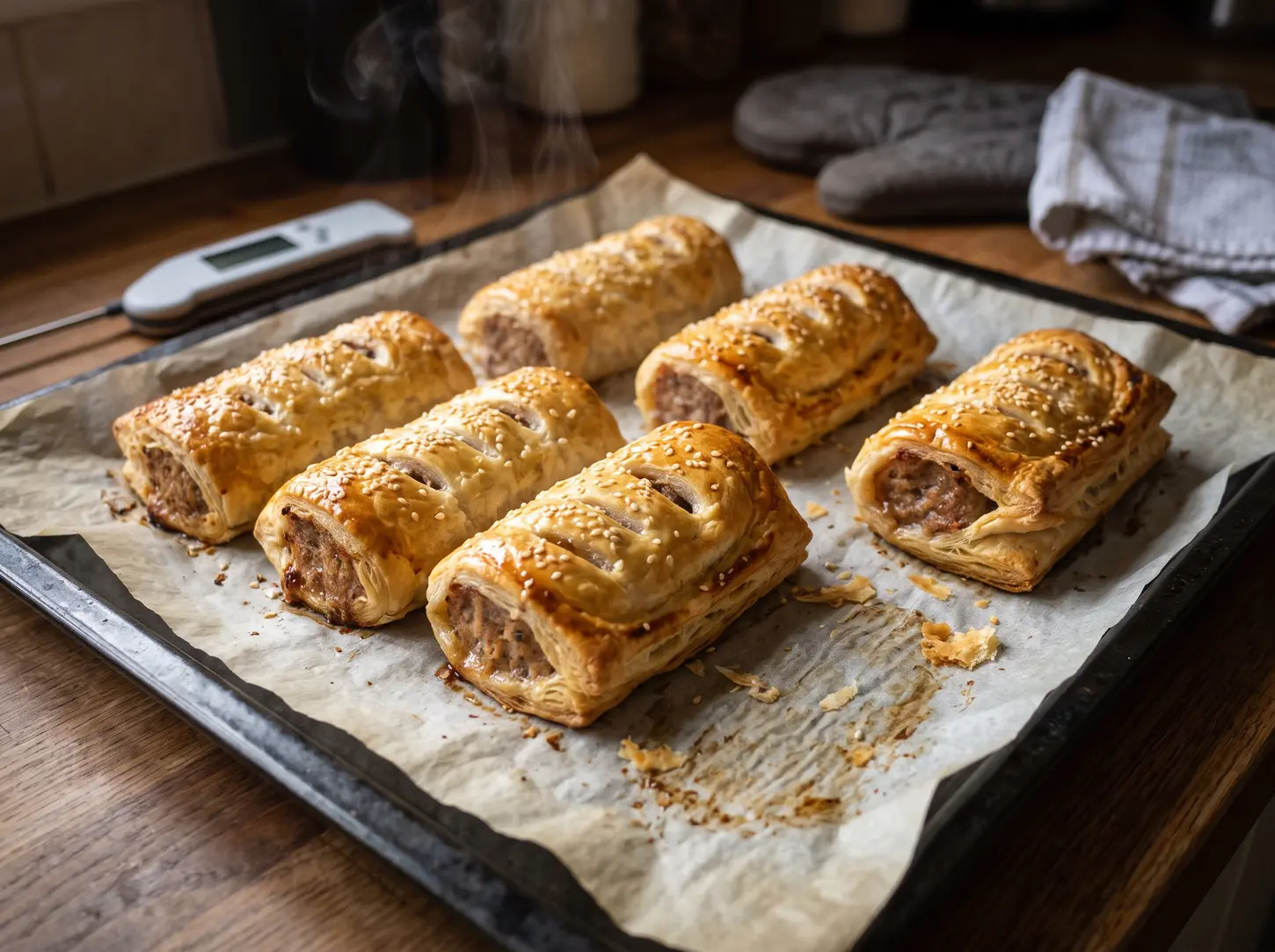
A good sausage roll comes down to two things: golden, flaky pastry and a juicy filling that’s cooked all the way through. Get the timing wrong and you’ll end up with one without the other. Pull them out too early and the centre is undercooked. Leave them too long or crank the heat, and the pastry burns while you wait for the filling to catch up.
There’s no single cooking time that suits every sausage roll. It changes with your appliance, the size of the rolls, the thickness of the pastry and whether they’re going in fresh or frozen. A cocktail roll and a bakery-sized roll can be 15 minutes apart, even at the same temperature.
This guide covers the oven, air fryer, toaster oven and sausage roll maker, plus frozen rolls, mini rolls and reheating leftovers. At A Place 2 Meat, we’ll also show you how to check the filling properly, because as butchers, that’s the part we care about most. And if you’d rather leave the baking to someone else this week, Brisbane has plenty of bakeries doing them well. We’ve put together a list of where to get the best sausage rolls in Brisbane.
Quick answer: Standard-sized fresh sausage rolls take about 25–30 minutes in a conventional oven at 200–210°C, or 20–30 minutes in a fan-forced oven at 180–190°C. The filling should reach at least 75°C in the centre.
How Long Does It Take to Cook Sausage Rolls?
| Cooking Method | Temperature | Approximate Cooking Time |
| Conventional oven | 200–210°C | 25–30 minutes |
| Fan-forced oven | 180–190°C | 20–30 minutes |
| Air fryer | 180°C | 12–18 minutes |
| Toaster oven | 200°C | 20–30 minutes |
| Convection oven | 180–190°C | 20–30 minutes |
| Reheating in oven | 160–180°C | 8–12 minutes |
| Reheating in air fryer | 160–170°C | 4–7 minutes |
These are starting points for typical homemade or fresh sausage rolls, not fixed times. Size, how cold the filling is, how your appliance runs and the instructions on store-bought products can all change the result.
What Is the Best Temperature for Cooking Sausage Rolls?
Puff pastry needs a hot oven. It’s made of thin layers of dough and fat (butter or margarine, depending on the brand). In a hot oven, the water in the pastry turns to steam and pushes those layers apart. If the oven isn’t hot enough, the fat melts out slowly instead, and you get flat, greasy pastry. For most sausage rolls, 200–210°C in a conventional oven does the job.
Fan-forced ovens move hot air around the food, so they cook more efficiently than a conventional oven. The standard conversion is to set a fan-forced oven 20°C lower, so around 180–190°C for sausage rolls.
Hotter isn’t always better, though. Push the temperature too high and the pastry browns before the heat has reached the middle of the filling. If your rolls are colouring fast, drop the heat by 10–15°C and give them a few extra minutes.
Whatever setting you use, preheat fully. Give the oven 15–20 minutes to come up to temperature before the tray goes in.
How Long Should Homemade Sausage Rolls Take?
Most standard-sized homemade sausage rolls, around 10–12 cm long, take 25–30 minutes at 200–210°C (180–190°C fan-forced). Our homemade Italian pork sausage rolls, made with thick pork sausages and Italian sausages, bake for 25–30 minutes at 210°C (190°C fan).
Larger, bakery-style rolls with a thick filling can need 30–35 minutes or more. Cocktail-sized rolls are much quicker, which we cover further down.
Cold filling adds time. If the assembled rolls have been in the fridge overnight, the heat has further to go before the centre is cooked. It’s a common reason a roll looks golden on top but is lukewarm in the middle.
Because the filling is raw sausage meat, it needs to be cooked through, not just warmed. Food Standards Australia New Zealand recommends cooking minced meat, including sausages, to at least 75°C in the centre. A digital meat thermometer is the most reliable way to check.
How Long to Cook Sausage Rolls in the Oven
Oven baking is the standard method for homemade sausage rolls. It gives steady, even heat, fits a full tray and gives puff pastry the conditions it needs to rise.
Conventional Oven Cooking Times
Set a conventional oven to 200–210°C and allow 25–30 minutes for standard-sized fresh sausage rolls.
Line the tray with baking paper and place the rolls seam-side down so they stay sealed. Leave a gap of a few centimetres between each one. Hot air needs room to move around the rolls. Packed tightly, they steam each other and the sides stay soft.
Properly baked pastry is deep golden rather than pale yellow, well puffed and showing visible layers. Lift one roll with a spatula before you take the tray out. The base should be golden and firm, not pale and soft.
Fan-Forced Oven Cooking Times
In a fan-forced oven, start at 180–190°C. The circulating air cooks faster and browns more evenly, so a batch that takes 30 minutes in a conventional oven may be done a few minutes sooner.
Fan-forced ovens can also dry the surface out more quickly. Start checking about five minutes before you’d expect the rolls to be ready, especially with large rolls. If you’re following a recipe written for a conventional oven, drop the temperature by 20°C.
How to Bake Sausage Rolls Step by Step
- Preheat the oven to 200–210°C (conventional) or 180–190°C (fan-forced).
- Line a baking tray with baking paper.
- Arrange the rolls seam-side down with space between each one.
- Brush the tops with beaten egg for a golden, glossy finish, if you like.
- Cut two or three small slits in the top of each roll to let steam escape.
- Bake until the pastry is puffed and deep golden, and the base is firm.
- Check that the centre of the filling has reached at least 75°C.
- Rest the rolls for a few minutes before serving.
How to Get Crispy, Golden Puff Pastry
- Thaw pastry sheets as the packet directs. Supermarket puff pastry sheets are usually thawed flat on the bench for 10–15 minutes, until just pliable. Use it straight away, while it’s still cold.
- Keep it cold until it goes in. In a warm Brisbane kitchen, puff pastry can soften within minutes, so chill the assembled rolls for 15–20 minutes before baking.
- Don’t overfill. Too much filling makes the rolls hard to seal and adds moisture to the base.
- Use a thin egg wash. It adds colour and shine. Keep it off the cut edges so the layers can still rise.
- Give the rolls space. A crowded tray traps steam.
- Preheat the tray. For a crisper base, put the tray in the oven while it heats, then slide the rolls onto it on their sheet of baking paper.
Why Are My Sausage Rolls Still Doughy at the Bottom?
A soft base usually comes down to one of four things:
- A wet filling. Moisture from the meat, or from onion or other extras that weren’t cooled and drained, soaks into the pastry from the inside.
- An oven that isn’t hot enough. If it wasn’t fully preheated, the top can colour while the base stays pale.
- A crowded tray. Steam trapped between the rolls stops the pastry crisping.
- Shelf position. The middle shelf suits most ovens. If the bases are always underdone, try the lower-middle shelf.
Check the underside of one roll before the tray comes out. If it’s pale, give the batch a few more minutes.
How Long to Cook Sausage Rolls in an Air Fryer
An air fryer is handy for smaller batches when you don’t want to heat the whole oven, and it does a good job of crisping the pastry.
Recommended Air Fryer Temperature and Cooking Time
Start at 180°C for 12–18 minutes for standard-sized fresh sausage rolls. An air fryer works like a compact fan-forced oven, with hot air moving quickly around a small space, so it cooks faster than a conventional oven.
The range is wide because air fryers vary a lot. Basket size, fan strength and how close the element sits to the food all change the result. That speed also means the pastry can brown before the filling has caught up, so don’t judge doneness on colour alone.
How to Cook Sausage Rolls in an Air Fryer
- Preheat the air fryer if the manufacturer recommends it.
- Place the rolls in a single layer, with space between each one.
- Cook at 180°C.
- Check the pastry and filling from around 10 minutes.
- If the pastry is done but the filling hasn’t reached 75°C, lower the temperature slightly and keep cooking.
Tips for Getting Crispy Sausage Rolls in an Air Fryer
- Don’t overcrowd the basket. Air needs to reach every side of each roll.
- Use the right liner. If you use baking paper, choose one made for air fryers and make sure the rolls weigh it down. Loose paper can lift into the element.
- Go easy on the egg wash. Drips burn in the basket and can smoke.
- Check the underside towards the end of cooking.
- Turn the heat down if needed. If the pastry is browning too quickly, drop to 160–170°C and cook a little longer.
Can You Cook Homemade Sausage Rolls in an Air Fryer?
Yes. Homemade sausage rolls work well in an air fryer. You’ll just be cooking fewer at a time, and smaller batches are easier to keep an eye on.
Thick, generously filled rolls may need longer than 18 minutes. The pastry on a big roll can look done well before the centre is, so use a thermometer.
How Long to Cook Sausage Rolls in Other Appliances
Toaster Oven and Convection Oven Cooking Times
A benchtop toaster oven at 200°C will usually cook sausage rolls in 20–30 minutes, but it behaves differently to a full-sized oven. The elements sit close to the food, so the tops can brown well before the filling is done. Cook small batches on the middle or lowest shelf. If the tops colour too fast, lower the temperature or loosely cover them with foil, keeping the foil well clear of the elements.
Treat a convection oven like a fan-forced oven: 180–190°C for 20–30 minutes. Some benchtop convection ovens run hotter than their dial suggests, so check your first batch early.
Cooking Sausage Rolls in a Sausage Roll Maker or Pie Maker
Benchtop sausage roll makers, and pie makers with sausage roll plates, cook quickly because the pastry sits against heated plates on both sides. Times vary between models, so follow the manual and check the centre of the filling with a thermometer before serving. Many of these appliances have no temperature control, so thinner fillings work best.
How Long to Cook Frozen Sausage Rolls
How Long to Cook Frozen Sausage Rolls in the Oven
Frozen rolls start much colder, so the heat has to thaw the filling before it can cook it. Expect them to take noticeably longer than fresh rolls at the same temperature.
For store-bought frozen sausage rolls, follow the packet. The manufacturer’s time and temperature account for that product’s size, pastry and filling. For homemade rolls you’ve frozen yourself, bake at 200°C (180°C fan-forced) and start checking at around 30 minutes, then keep going until the centre reaches 75°C.
How Long to Cook Frozen Sausage Rolls in an Air Fryer
Frozen rolls can go straight into the air fryer, but they’ll need longer than fresh. Start at around 170–180°C, cook in small batches with space between the rolls, and begin checking from around 15 minutes. A slightly lower temperature gives the centre time to cook before the pastry gets too dark.
Pastry colour is a poor guide with frozen rolls. Check the centre of the filling every time.
Should You Thaw Frozen Sausage Rolls Before Cooking?
It depends on the product. Many store-bought frozen sausage rolls are made to cook from frozen, and the packet will say so. Follow those instructions.
For homemade frozen rolls, thawing overnight in the fridge is the easier option. They’ll cook more evenly and take less time, and you’re less likely to end up with dark pastry and a cold centre.
Always thaw in the fridge, not on the kitchen bench. Raw meat left at room temperature warms quickly into the range where bacteria multiply, particularly in a Brisbane summer.
How to Tell When Frozen Sausage Rolls Are Fully Cooked
- The pastry is golden and puffed across the whole batch
- The filling is hot all the way through
- There’s no cold or icy patch in the centre
- A food thermometer reads at least 75°C in the thickest part of the filling
How Long to Cook Mini and Cocktail Sausage Rolls
Cooking Time for Mini Sausage Rolls in the Oven
Cocktail-sized rolls, around 4–6 cm long, have less filling and less pastry, so they cook faster. At 200°C (180°C fan-forced), start checking from about 15 minutes. Very small rolls, or ones with thin pastry, can go from golden to overdone quickly, particularly in a fan-forced oven.
If you’re baking minis and standard rolls at the same time, put them on separate trays so you can take the minis out first.
Cooking Time for Mini Sausage Rolls in an Air Fryer
Minis suit the air fryer well. At 180°C, start checking from around 8–10 minutes. Their small size means they brown fast, so treat your first batch as a test run and use it to set the timing for the rest.
How to Bake Sausage Rolls for Parties and Gatherings
- Prep ahead. Shape the rolls, lay them on lined trays, cover and refrigerate until it’s time to bake.
- Space them evenly. Consistent spacing means the whole batch cooks at the same rate.
- Rotate the trays halfway through if you’re baking more than one at a time, or if your oven has a hot spot.
- Bake in rounds. Sausage rolls are best fresh from the oven, so stagger your batches if you can.
- Keep them hot and uncovered. A low oven of around 100–120°C keeps cooked rolls warm. Covering them traps steam and softens the pastry. Keep hot food above 60°C, and keep raw rolls in the fridge until they go in.
For a quick party option, Cheerios wrapped in puff pastry are easy to prep and bake faster than standard rolls. Check the pastry is cooked underneath and the centre reaches 75°C before serving.
How Long to Reheat Sausage Rolls
The goal when reheating is to warm the filling through without drying out the pastry. Whatever method you use, reheated food should reach 75°C in the centre.
Reheating Sausage Rolls in the Oven
Reheat refrigerated, standard-sized rolls at 160–180°C for 8–12 minutes. Moderate heat warms the filling before the pastry overbrowns. Spread them out on a lined tray, and give larger rolls a few extra minutes.
Reheating Sausage Rolls in an Air Fryer
At 160–170°C, most rolls reheat in 4–7 minutes, depending on size. The air fryer is a convenient way to bring back crisp pastry after a night in the fridge. Check the centre before serving, as the pastry will feel hot well before the filling is.
Can You Reheat Sausage Rolls in a Microwave?
You can, but the pastry will turn soft. Heat in short bursts on medium power, checking as you go, so the filling heats evenly. If you want crisp pastry, start them in the microwave and finish them in the oven or air fryer for a few minutes. Either way, the filling should be steaming hot and reach 75°C in the centre.
How Many Times Can You Reheat Sausage Rolls?
Ideally, only once. Each cycle of cooling and reheating takes food through the temperature range where bacteria grow, and the risk adds up. Refrigerate leftovers once they’ve stopped steaming, reheat only what you’ll eat and throw out anything that’s already been reheated.
How Long Do Sausage Rolls Keep in the Fridge and Freezer?
| Sausage Rolls | Fridge | Freezer |
| Raw, assembled | Bake within 24 hours | Up to around 3 months for best quality |
| Cooked | Eat within 2–3 days | Up to around 2–3 months for best quality |
These are general guides. Store cooked rolls in an airtight container. To freeze raw rolls, set them on a lined tray until firm, then transfer them to a freezer bag so they don’t stick together.
How to Know When Sausage Rolls Are Fully Cooked
As butchers, this is the section we’d ask you not to skip. Golden pastry tells you the outside is done. It tells you nothing about the filling.
Check the Colour of the Pastry
Properly baked puff pastry is an even golden brown on the top and sides, with visible, separated layers and a firm, coloured base. That’s your first sign the rolls are nearly there, but it isn’t your final check. A roll can look perfect and still be undercooked in the middle.
Check the Internal Temperature
Food Standards Australia New Zealand recommends cooking minced meat, including sausages, to at least 75°C in the centre. That’s the target for any sausage roll made with raw sausage meat or mince. The lower temperatures you may see for steaks or whole pork cuts don’t apply here, because mincing spreads bacteria from the surface through the whole filling.
Insert a digital thermometer into the end of a roll and push the probe into the centre of the filling, where it’s thickest. If it reads below 75°C, put the tray back in and check again in a few minutes. This matters most for large rolls, rolls baked from cold or frozen, and generously filled homemade batches.
Check the Meat Filling
A cooked filling is firm and hot throughout, with no raw-looking patches. Colour can mislead, though. Some sausage meat stays slightly pink when fully cooked, depending on the ingredients and seasoning, while other fillings can brown before they’re safe. Temperature is the reliable check.
What Affects Sausage Roll Cooking Time?
The Size and Thickness of the Sausage Rolls
The bigger the roll, the further the heat has to travel. A bakery-style roll can be several times the weight of a cocktail roll, so it needs far longer to cook through, even at the same temperature. A thick log of filling also takes longer than a thin one.
Fresh Versus Frozen Sausage Rolls
Starting temperature makes a big difference. Rolls from the fridge are cold, and frozen rolls have to thaw before they start cooking. The colder they start, the longer they take and the more likely the pastry is to finish first. Always check the centre of frozen rolls.
Puff Pastry Thickness
Thicker pastry takes longer to cook through and slows the heat reaching the filling. The doubled-up pastry at the seam is often the last part to cook, which is one reason to bake seam-side down. Keep pastry cold but properly thawed so it bakes evenly.
The Type of Filling
Pork, beef, lamb and chicken fillings all behave a little differently. Dense, tightly packed fillings take longer to heat through. Fillings with added vegetables or cheese carry more moisture, which can soften the pastry, and lean fillings can dry out if overcooked. Whatever the meat, the target is the same: 75°C in the centre.
Your Oven or Air Fryer
Every appliance has its quirks: hot spots, uneven fans, elements that run hot and baskets of different sizes. Published times are a starting point, not a rule. The first batch in a new appliance tells you more than any recipe, so take note of what worked.
Common Sausage Roll Cooking Mistakes to Avoid
Cooking at Too High a Temperature
More heat won’t fix pale pastry. It just browns the outside before the filling is cooked. Stick to the recommended range and lower the heat if the rolls are colouring early.
Overcrowding the Baking Tray or Air Fryer
Rolls packed together steam each other. You’ll get soft sides, uneven browning and a longer cook. Use a second tray or cook in batches.
Using Wet or Overfilled Sausage Filling
Extra moisture ends up in the pastry, and overfilled rolls are hard to seal and tend to leak. Cool and drain any cooked ingredients before mixing them in, and leave enough pastry to close each roll properly.
Not Preheating the Oven
Puff pastry needs a blast of heat to rise. In a cold oven, the fat melts out before the layers can set and rise, leaving flat, greasy pastry.
Cutting Sausage Rolls Too Soon
Straight from the oven, the filling is very hot and still loose. A few minutes’ rest lets it settle so the rolls hold together when cut, and saves you a burnt mouth.
Relying Only on Cooking Time
Times are a guide. Size, filling, starting temperature and your appliance all shift the result. A thermometer reading of 75°C in the centre is what tells you they’re done.
Tips for Making Better Homemade Sausage Rolls
Choose Good-Quality Sausage Meat
The filling makes the sausage roll, and the easiest way to get it right is to start with good sausages. Using butcher-made sausages means you can squeeze the meat straight out of the casings, add your own extras and choose a flavour that suits the occasion.
For a classic pork roll, our thick pork sausages make a reliable base. If you’d rather a beef roll, our beef sausages come ready-seasoned for a bold, peppery filling. Lamb and Italian-style sausages are worth trying too.
Any sausages left over from the pack can go on the barbecue or into the pan. The best way to cook sausages depends on their type and thickness.
Keep Your Puff Pastry Cold
Puff pastry gets its flaky layers from cold fat, and warm pastry loses that structure before it ever reaches the oven. Brisbane kitchens are warm for much of the year, so work in small batches. Roll and fill a few, put them in the fridge, then do the next lot. Cold rolls going into a hot oven is the combination you’re after.
Avoid Making the Filling Too Wet
If you’re adding caramelised onion, sautéed vegetables or other cooked extras, let them cool completely and drain off any liquid before mixing them in. A drier filling keeps the base of the pastry crisp.
Season the Filling Properly
Start with salt and pepper, then build from there. A few combinations that work well:
| Filling | Flavour Ideas |
| Pork | Sage, thyme, fennel seed, apple |
| Beef | Rosemary, Worcestershire sauce, smoked paprika, mustard |
| Lamb | Cumin, coriander, mint, a little chilli |
| Chicken | Lemon zest, tarragon, leek, parsley |
Garlic and onion suit almost all of them. If you’re using seasoned sausages, go easy on extra salt. To check your seasoning before rolling, fry a small spoonful of the filling, taste it and adjust.
Prepare Sausage Rolls Ahead of Time
Shape the rolls, lay them on a lined tray, cover them with cling wrap and refrigerate overnight. Bake them straight from the fridge, allowing a few extra minutes. To freeze, set them on a tray until firm, then transfer them to a freezer bag. Keep raw rolls in the fridge or freezer until they go in the oven, never on the bench.
Frequently Asked Questions About Cooking Sausage Rolls
How Long Do Sausage Rolls Take to Cook at 180°C?
In a fan-forced oven, 180°C is the standard equivalent of 200°C conventional, so standard fresh rolls take around 20–30 minutes. In an air fryer at 180°C, they take around 12–18 minutes. In a conventional oven, 180°C is on the low side for puff pastry, so expect 30 minutes or more and a little less puff.
How Long Do Sausage Rolls Take to Cook at 200°C?
In a conventional oven at 200°C, standard-sized fresh rolls usually take 25–30 minutes. For a fan-forced oven, 200°C is hotter than we’d recommend, as the pastry can brown before the filling is cooked. Drop it to 180–190°C instead.
Is It Better to Cook Sausage Rolls in the Oven or Air Fryer?
The oven is better for big batches and gives consistent results across a full tray. The air fryer is quicker, crisps the pastry well and suits a handful of rolls or reheating leftovers. For a party, use the oven. For four rolls on a weeknight, the air fryer makes more sense.
Can You Cook Sausage Rolls from Frozen?
Yes, as long as the product is made to be cooked from frozen and you follow the instructions. They’ll take longer than fresh rolls, and the filling still needs to reach 75°C in the centre.
Why Are My Sausage Rolls Soggy?
Usually it’s a wet filling, not enough baking time, a crowded tray or poor airflow. Warm pastry or an oven that wasn’t fully preheated can also leave them soft.
Why Are My Sausage Rolls Brown on the Outside but Raw in the Middle?
The oven is likely too hot for the size of the roll, the filling is too thick, or the centre was still frozen or very cold. Lower the temperature, cook them a little longer and check the centre with a thermometer.
Should I Brush Sausage Rolls with Egg Before Baking?
It’s optional, but egg wash gives a deeper golden colour and a glossy finish. Brush on a thin layer before baking and keep it off the cut edges.
Do You Need to Turn Sausage Rolls While Baking?
Not in a conventional oven. If your oven browns unevenly, rotate the tray halfway through. In an air fryer, turning larger rolls once can help the base colour evenly.
How Long Should Sausage Rolls Cool Before Eating?
Give them a few minutes, as the filling is very hot straight out of the oven. They’re best eaten warm, while the pastry is still crisp.
Can You Prepare Sausage Rolls the Night Before?
Yes. Assemble them, cover them and refrigerate overnight, then bake straight from the fridge. Allow a few extra minutes and check the filling reaches 75°C.
Better Sausage Rolls Start at A Place 2 Meat
Timing and temperature get you most of the way, but the filling is what people remember, and that starts with the sausages.
At A Place 2 Meat, we stock a full range of sausages for homemade sausage rolls, from classic pork to beef and Italian-style. Order online, or drop into our store at Newmarket Village and grab what you need for your next batch. Not sure which sausage suits the roll you have in mind? Ask us in store. We’re always happy to help.