
About Us
Our meat is always fresh, hand-cut, delicious and prepared with care. We pride ourselves on the quality of meat we sell to our customers because we value you!
Contact Info
- 110/400 Newmarket Road, Newmarket QLD 4051
- +0738564216
- 110/400 Newmarket Road, Newmarket QLD 4051
- +0738564216
Gyudon (Japanese Beef & Rice Bowl)
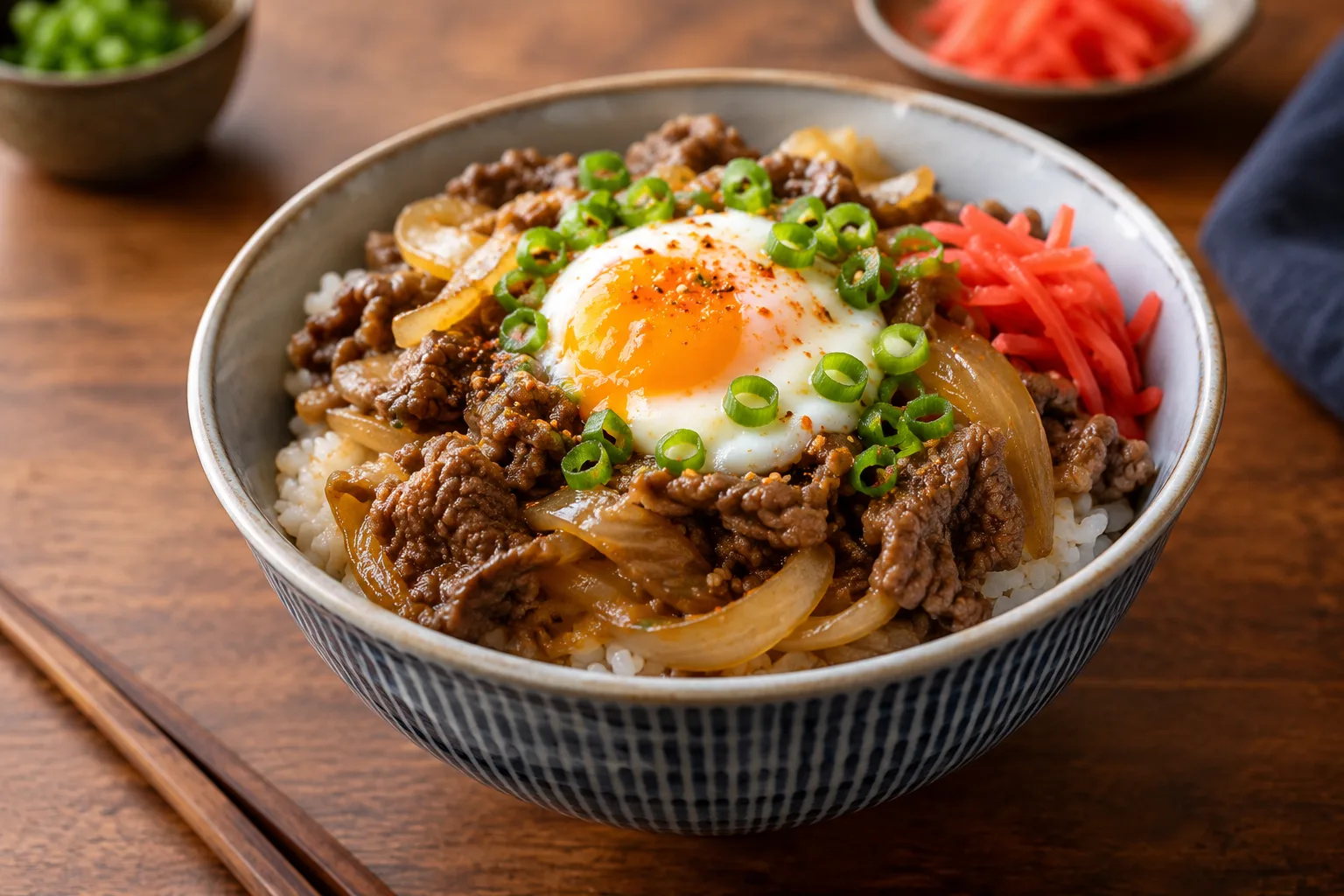
Gyudon is Japanese comfort food at its simplest: thinly sliced beef and onion simmered in a savoury-sweet sauce, then spooned over a bowl of steamed rice. It’s rich in umami, needs just one pan, and once the beef is sliced and the rice is on, it’s ready in about 15 minutes. That makes it a handy option when you want a quick beef and rice dinner on a weeknight.
There’s not much to hide behind in this dish. A few pantry staples — soy sauce, mirin, sake and dashi — do the heavy lifting alongside the natural sweetness of the onion. The rest comes down to three things: good beef, a balanced sauce and freshly cooked rice.
If you’re after a homemade gyudon with real depth of flavour, rib-eye is a great place to start. At A Place 2 Meat, our Scotch Fillet — boneless rib-eye — brings the marbling that makes this gyudon recipe worth cooking again.
What Is Gyudon?
The Origins of Japanese Beef Bowls
Gyudon (牛丼) literally means “beef bowl”. Gyū is beef, and don is short for donburi — the family of Japanese rice bowl dishes where a topping and its sauce are served over steamed rice. Oyakodon (chicken and egg) and katsudon (crumbed pork cutlet) belong to the same family.
The dish traces back to the Meiji era, when beef became more common in Japan and gyunabe — beef simmered in a pot with a soy-based sauce — grew popular. Serving that simmered beef over rice made for a fast, filling meal, and over the 20th century gyudon became a staple of Japanese beef bowl chains and home kitchens alike.
The classic gyudon Japanese beef bowl hasn’t changed much since: thinly sliced beef, onion, a seasoned dashi-based sauce and short-grain rice.
What Makes Gyudon Different from Other Beef Dishes?
Speed is the big one. Most beef dishes with a sauce lean on long, slow cooking — think stews and braises, where tougher cuts need hours to break down. Gyudon flips that. The beef is sliced so thin that it cooks in a few minutes in gently simmering liquid.
The sauce is the other giveaway. It’s a light, savoury-sweet broth rather than a thick gravy, built on dashi, soy and mirin. There’s just enough of it to soak into the rice, so every mouthful carries flavour.
And the presentation is about as simple as it gets — everything in one bowl, ready to eat.
Ingredients for Homemade Gyudon
This easy Japanese beef recipe serves three to four people.
Beef: Rib-Eye or Chuck
- 450 g (1 lb) thinly shaved rib-eye or chuck beef
Thin slices are the whole point here. Shaved beef cooks in minutes, soaks up the sauce and stays tender. Thicker pieces need longer in the pan, and by the time they’re cooked through, the sauce has reduced too far and the meat has tightened up.
Rib-eye is a standout choice because of its marbling. Those fine streaks of fat melt as the beef simmers, adding flavour to the meat and richness to the broth.
In Australia, boneless rib-eye is sold as Scotch fillet, and it’s the cut we recommend for this recipe. Our Scotch Fillet is grass-fed and halal-certified, and with no bone to work around, it’s ready to slice straight from the pack. You can slice it thinly at home (we cover how below), or just ask us at the shop and we’ll slice it for you.
Chuck is the budget alternative. It’s a hard-working shoulder cut with good beefy flavour but more connective tissue, so it needs to be shaved very thin for a quick simmer — and even then it won’t be as tender as rib-eye.
Onion and Japanese Rice
- 1 large onion, thinly sliced
- 4–5 cups cooked Japanese short-grain white rice (about 2 cups uncooked)
Onion isn’t just there for bulk. As it softens in the broth, it releases natural sweetness that becomes part of the sauce — which is why a Japanese beef bowl with onions tastes rounder and more balanced than one without.
Short-grain rice is slightly sticky, holds together in the bowl and soaks up the sauce without turning mushy. It gives the beef and broth a neutral base to sit on. Allow 1 to 1½ cups of cooked rice per bowl — gyudon is meant to be a proper meal.
Ingredients for the Gyudon Sauce
- 1 cup dashi stock or prepared instant dashi
- ½ cup dry sake
- ¼ cup soy sauce
- 2 tablespoons mirin
- 2 teaspoons sugar
- 2 teaspoons freshly grated ginger
Here’s what each one brings to this gyudon sauce recipe:
| Ingredient | What It Does |
| Dashi | Provides the savoury, umami base that gives the broth its Japanese character |
| Dry sake | Adds depth and softens strong meaty notes; most of the alcohol cooks off as it simmers |
| Soy sauce | Brings saltiness and savoury depth |
| Mirin | Adds gentle sweetness and a light sheen |
| Sugar | Balances the salt from the soy sauce |
| Fresh ginger | Adds a clean, warming aroma that keeps the sauce from tasting heavy |
Soy sauce and mirin are easy to find in Brisbane supermarkets. Instant dashi and the toppings below are usually stocked at Asian grocers, and you’ll find dry sake at bottle shops.
Optional Gyudon Toppings
- Poached or fried eggs
- Sliced spring onions
- Beni-shoga (Japanese pickled red ginger)
- Shichimi togarashi (Japanese seven-spice seasoning)
Each topping does a different job. Egg adds richness, spring onion brings freshness, beni-shoga cuts through with sharp acidity, and shichimi togarashi adds a bit of heat. Use one or all of them — it’s your bowl.
How to Prepare Beef for Gyudon
Choosing the Right Beef Cut
So, what cut of beef is best for gyudon? Plenty of cuts will work as long as they’re sliced thin, but rib-eye and chuck are two of the most practical.
Rib-eye is the richer option. Its marbling keeps the beef juicy through a short simmer and adds flavour to the broth, which is why it’s ideal for an easy gyudon recipe with rib-eye beef. If that’s the bowl you’re after, start with our Scotch Fillet. It’s boneless, so there’s no deboning — just trim, chill and slice.
Chuck costs less, but it’s firmer and chewier in a quick-cooked dish. If you go that way, slice it as thinly as you possibly can.
How to Slice Rib-Eye Thinly
Here’s how to slice rib-eye for gyudon at home:
- Trim as needed. Remove any sinew or thick outer fat, but leave the marbling through the meat — that’s where the flavour is.
- Chill until firm. Pop the Scotch fillet in the freezer for 20–30 minutes or in the fridge for about an hour. You want it firm, not frozen solid.
- Find the grain. Look for the direction the muscle fibres run through the meat.
- Slice across the grain. Using a sharp knife, cut across the fibres as thinly as you can, aiming for around 2–3 mm. This shortens the fibres and makes the beef easier to eat.
Rather skip the knife work? Ask us at A Place 2 Meat and we’ll slice your Scotch fillet thin for you.
How to Make Gyudon (Japanese Beef & Rice Bowl)
Here’s how to make gyudon at home. This Japanese beef rice recipe comes together in five steps, so get the rice cooking and the sauce ingredients measured before you start — once the pan’s going, it moves quickly.
| Serves | Prep Time | Cook Time |
| 3–4 | 15 minutes (plus chilling time if slicing the beef at home) | About 10 minutes |
Step 1: Simmer the Onion and Sauce
Combine the sliced onion, dashi, sake, soy sauce, mirin and sugar in a shallow pan. Stir to dissolve the sugar and bring to the boil over medium-high heat.
Reduce the heat and simmer for about five minutes, until the onion starts to soften. It’ll keep cooking once the beef goes in, so it doesn’t need to be completely soft yet.
Step 2: Add the Thinly Sliced Beef
Separate the beef slices so they don’t clump together, then spread them through the simmering liquid.
As the beef starts to cook, some grey foam (known as aku in Japanese cooking) will rise to the surface. Skim it off with a spoon so the broth stays clear and clean-tasting.
Keep the pan uncovered at a gentle simmer and cook for 1–2 minutes, until the beef is just cooked through. Thinly sliced beef cooks fast, so stay close to the pan — if you leave it simmering too long, it’ll tighten up and lose its tenderness.
Step 3: Finish with Fresh Ginger
Stir in the grated ginger and cook for another minute. Taste the sauce and adjust if needed — a dash more soy for salt or a pinch of sugar for sweetness.
Step 4: Prepare the Rice Bowls
Divide the hot rice between three or four bowls, allowing 1 to 1½ cups per bowl. Fluff it gently with a rice paddle or chopsticks so it doesn’t pack down.
Step 5: Assemble and Garnish the Gyudon
Spoon the beef and onion over the rice, then add a few spoonfuls of the cooking broth so it soaks into the rice below.
Finish with an egg, spring onions, pickled ginger or a sprinkle of shichimi togarashi. Serve straight away while it’s hot.
Tips for Making the Best Homemade Gyudon
Slice the Beef as Thinly as Possible
Thin slices cook fast and take on more of the sauce. If you’re slicing at home, chill the beef until firm first — it’s far easier to get even slices that way. Or ask our team to slice it for you when you pick up your beef.
Choose Well-Marbled Beef
Intramuscular fat — the marbling running through the meat — melts as the beef cooks, keeping it tender and adding flavour to the broth. That’s why well-marbled rib-eye makes such a rich bowl. If you’d like to try it, our Scotch Fillet is a good place to start.
Avoid Overcooking the Beef
Thin slices don’t need long — a minute or two is usually all it takes. Simmer them too hard or for too long and they’ll tighten up and turn chewy. Keep the liquid at a gentle simmer rather than a rolling boil, and take the pan off the heat as soon as the beef is just cooked through.
Balance the Sweet and Savoury Flavours
Soy sauce brings salt and savoury depth, dashi adds umami, and mirin and sugar balance it all with sweetness. If something tastes off, adjust in small amounts — a few drops of soy or a pinch of sugar at a time. It’s easy to add more and hard to take it back out.
Use Freshly Cooked Rice
Hot, freshly cooked rice soaks up the broth and keeps the bowl warm. Time the rice so it’s ready when the beef is, then assemble the bowls just before serving.
What to Serve with Gyudon
Gyudon is a full meal on its own, but if you’re wondering what to serve with gyudon, a few simple sides round it out.
Miso Soup
A light miso soup with tofu, wakame and spring onion sits comfortably alongside the savoury beef without competing with it.
Japanese Pickles and Cucumber Salad
Crisp, tangy sides balance the richness of the beef. Try store-bought tsukemono (Japanese pickles) or a quick cucumber salad dressed with rice vinegar, a pinch of sugar and sesame seeds.
Steamed Greens and Edamame
Bok choy, spinach, broccolini or edamame add colour and texture, and they’re quick to steam while the beef simmers.
Eggs and Traditional Garnishes
A soft-cooked egg, a scatter of spring onions and a little beni-shoga on the side are classic finishing touches. Together they add richness, freshness and a sharp contrast to the sweet-savoury sauce.
Gyudon Variations to Try at Home
Gyudon with a Soft-Cooked Egg
Top the bowl with a poached egg, a soft-boiled egg or a fried egg with a runny yolk. As you eat, the yolk mixes into the sauce and rice for a richer, silkier bowl.
Spicy Gyudon
Sprinkle on shichimi togarashi to taste, or use your preferred chilli seasoning. A few drops of rayu (Japanese chilli oil) or some fresh sliced chilli both work well.
Mushroom Gyudon
Add thinly sliced shiitake mushrooms with the onion in Step 1. They bring extra savoury flavour that suits the dashi. Enoki or king oyster mushrooms work too.
Extra Onion Gyudon
Double the onion and give it a few extra minutes in the broth before the beef goes in. You’ll get a sweeter, softer and more substantial topping that stretches the beef a little further.
Frequently Asked Questions About Gyudon
What Is Gyudon in Japanese Cuisine?
Gyudon is a Japanese beef and rice bowl: thinly sliced beef and onion simmered in a savoury-sweet sauce and served over rice. It’s one of the best-known donburi dishes, and the name combines gyū (beef) with don, short for donburi (rice bowl).
What Cut of Beef Is Best for Gyudon?
Thinly sliced rib-eye is our pick. It’s well marbled, so it stays tender and adds richness to the sauce. Chuck is cheaper with good beefy flavour, but it’s firmer and has more connective tissue, so it needs to be shaved very thin. Whichever you choose, slice it as thinly as possible.
Can You Use Rib-Eye Steak for Gyudon?
Yes — it’s one of the best options. In Australia, boneless rib-eye is sold as Scotch fillet, so there’s no deboning involved. Trim it, chill it until firm and slice it thinly across the grain before simmering. If you’re buying our Scotch Fillet, just ask and we can slice it for you at the shop.
Can You Make Gyudon Without Dashi?
You can. A light chicken or vegetable stock is the easiest swap, though the flavour won’t be quite the same — dashi’s savoury, slightly oceanic taste is a big part of what makes an authentic Japanese beef bowl recipe taste the way it does. Instant dashi granules are an easy middle ground and keep well in the pantry.
Is Gyudon Spicy?
No, the basic recipe isn’t spicy — it’s savoury and slightly sweet. If you like some heat, add shichimi togarashi or your favourite chilli seasoning at the table.
Can You Prepare Gyudon Ahead of Time?
Yes, the beef and onion mixture can be made ahead. Once it stops steaming, refrigerate it promptly in a sealed container and eat it within a day or two. Reheat it until it’s steaming hot all the way through.
Rice is best cooked fresh. If you’re using leftover rice, cool it quickly, refrigerate it promptly and reheat it only once, until steaming hot. With Brisbane’s warm weather, it pays not to leave cooked food sitting out on the bench.
What Type of Rice Is Best for Gyudon?
Japanese short-grain white rice is the traditional choice. Its slightly sticky grains hold together and soak up the sauce. Medium-grain rice, such as Australian-grown Calrose, is a good alternative and easy to find at the supermarket. Long-grain rice like jasmine or basmati will do in a pinch, but the grains stay drier and more separate.
Make Your Own Japanese Beef and Rice Bowl with Quality Beef
Gyudon is one of those quick beef dinner recipes that earns a regular spot on the weeknight rotation: one pan, a handful of pantry staples and about 10 minutes of cooking.
Get the basics right and the rest takes care of itself — beef sliced thin, a sauce balanced between sweet and savoury, and rice cooked fresh. Of all the thinly sliced beef recipes you could add to your list, this Japanese beef and rice bowl recipe is one of the simplest.
For a richer bowl, try it with rib-eye. Pick up our Scotch Fillet from A Place 2 Meat and let us know if you’d like it sliced for gyudon.
Your Gyudon Recipe Starts at A Place 2 Meat
Good gyudon starts at the butcher. Drop into A Place 2 Meat in Brisbane or order online, and if you’d like your Scotch fillet sliced thin, just ask our team at the shop. Bring a cooler bag if you’re shopping on a warm day and get your beef into the fridge as soon as you’re home.
Looking for your next meal? Browse our beef recipes for more ideas to cook with your next order.