
About Us
Our meat is always fresh, hand-cut, delicious and prepared with care. We pride ourselves on the quality of meat we sell to our customers because we value you!
Contact Info
- 110/400 Newmarket Road, Newmarket QLD 4051
- +0738564216
- 110/400 Newmarket Road, Newmarket QLD 4051
- +0738564216
How Long Does Meat Last in the Fridge and Freezer?
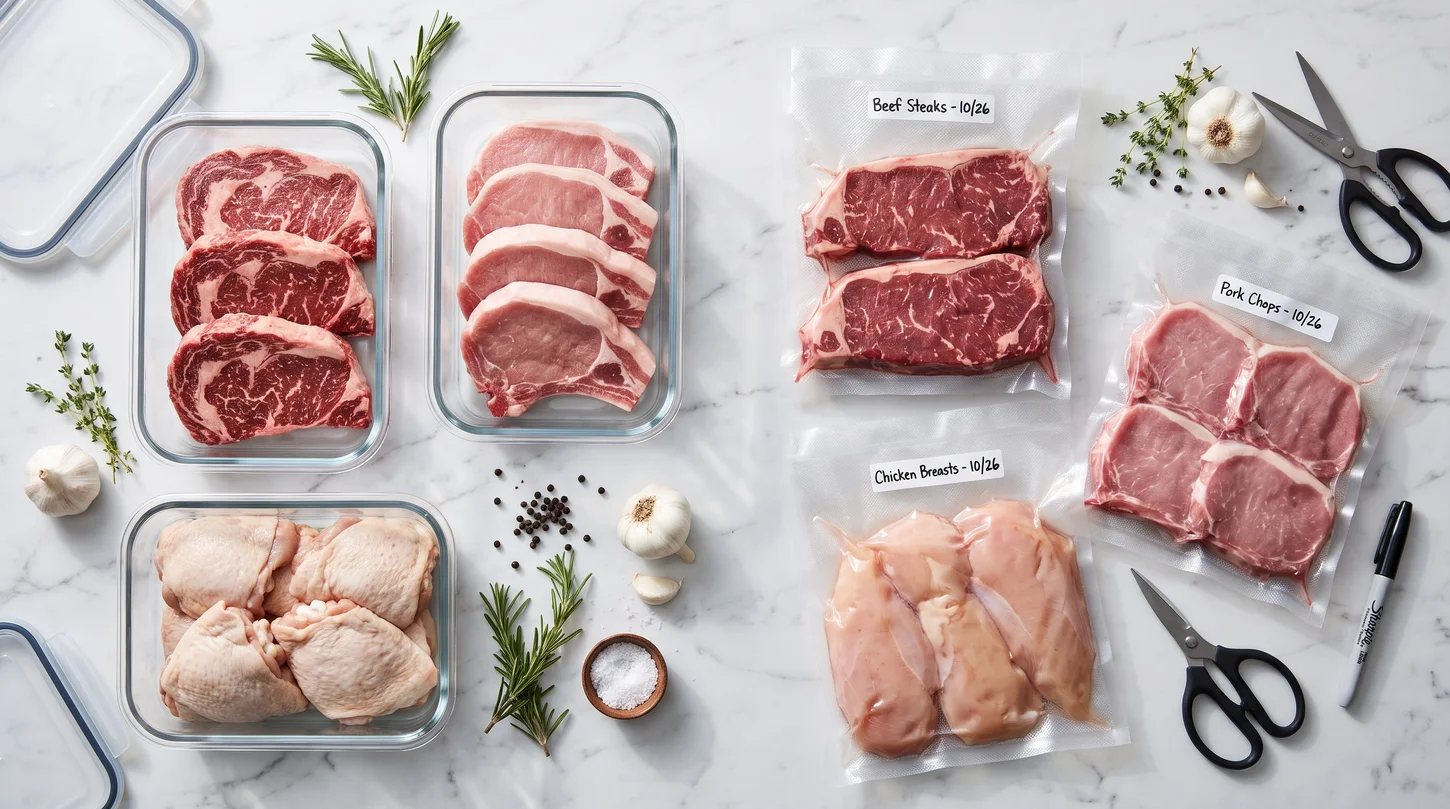
Knowing how long meat lasts in the fridge and freezer is one of those practical kitchen skills that saves money, reduces waste, and keeps your household safe. Whether you’ve just picked up a bulk beef order, stocked the fridge with chicken thighs for the week, or slow-cooked a lamb shoulder over the weekend, understanding proper meat storage takes the guesswork out of meal planning.
The answer to how long meat lasts isn’t a single number. It depends on the type of meat, whether it’s raw or cooked, the cut, how it’s packaged, and the temperature at which it’s stored. Fresh raw meat typically lasts a few days in the fridge, while freezing extends its storage life significantly and helps preserve quality for future meals.
It’s worth clarifying that recommended freezer storage periods are generally about quality rather than an automatic expiry date. Meat that has remained continuously frozen at the correct temperature may remain safe beyond those quality guidelines, but the texture and flavour may decline over time. That said, freezing doesn’t undo unsafe handling that happened before the meat went in.
To get the most out of your meat, keep the fridge at or below 5°C and the freezer at approximately -18°C or colder. Always follow the product’s use-by date and storage instructions, particularly for sealed, vacuum-packed or processed meat. These instructions are more specific than general guidelines and should be treated as the primary reference.
How Long Does Meat Last in the Fridge and Freezer?
The storage life of meat varies widely depending on the cut and whether it’s raw or cooked. Here’s a practical overview to help with shopping, meal planning and freezer management.
Quick Guide to Meat Storage Times
The table below is a general planning guide for home storage. Storage recommendations vary depending on packaging, refrigerator temperature and the product’s use-by date. Always check the label first, and refer to guidance from Healthdirect, Food Standards Australia New Zealand, and the CSIRO for detailed food-safety advice.
| Meat type | Fridge — raw | Freezer — quality guide |
| Beef steaks and roasts | 3–5 days | 4–12 months |
| Lamb chops and roasts | 3–5 days | 4–12 months |
| Pork chops and roasts | Around 3–5 days | 4–12 months |
| Beef, lamb or pork mince | 1–2 days | 3–4 months |
| Raw chicken pieces | 1–2 days | Up to 9 months |
| Whole raw chicken | Around 1–2 days | Up to 12 months |
| Raw sausages | 1–2 days | 1–2 months |
| Cooked meat and poultry | 3–4 days | 2–6 months |
These ranges are a working guide for home storage and not a universal guarantee. The CSIRO and the Food Safety Information Council recommend using or freezing fresh mince and raw poultry within 1–2 days. Always follow the product’s packaging and use-by date.
Does Meat Last Longer in the Fridge or Freezer?
Refrigeration slows bacterial growth, which is why raw meat can stay safe in the fridge for a limited number of days. Freezing goes further — it largely stops microbial growth while the meat remains continuously frozen. That’s why the fridge window is measured in days and the freezer in months.
The important distinction is that freezing doesn’t reset the clock on unsafe handling. If meat was mishandled before it went into the freezer — left out too long, stored above 5°C, or past its use-by date — freezing won’t make it safe.
Even when frozen meat stays food-safe, quality can decline over time. Ice crystals form within the muscle fibres, and moisture gradually escapes through the packaging, which can leave meat drier or less flavoursome after thawing. Proper packaging significantly reduces this.
How Long Does Raw Beef Last in the Fridge and Freezer?
Beef Steaks and Roasts
Fresh beef steaks — including rump, scotch fillet, rib eye and eye fillet — along with roasting cuts like brisket, rolled roast and silverside, generally last around 3–5 days in the fridge when stored at or below 5°C. This window applies to meat that’s in good condition when purchased and stored correctly from the moment it arrives home.
In the freezer, whole beef steaks and roasting cuts can maintain good quality for roughly 4–12 months. The range reflects differences in cut, fat content, packaging and how well air has been excluded. Thick roasts and steaks tend to retain their quality longer than minced beef because their lower surface area slows moisture loss and limits exposure to air.
Wrapping quality matters. Meat packaged in a vacuum-sealed bag or double-wrapped in freezer-safe materials will hold its quality noticeably longer than loosely wrapped cuts. If you’re buying beef cuts in larger quantities, dividing them into meal-sized portions before freezing means you only thaw what you need, which reduces waste and maintains better overall quality.
How Long Does Beef Mince Last?
Beef mince generally has a shorter safe refrigerated storage window than whole cuts — usually 1–2 days in the fridge. The reason comes down to how mince is made. Grinding beef increases the total surface area dramatically and distributes microorganisms from the outside of the meat throughout the entire batch. That combination means bacterial growth can occur more quickly in mince than in a whole steak.
If you’re not planning to cook your mince within that window, freeze it promptly rather than letting it sit. For easy freezing and faster defrosting, flatten mince into a thin, even layer inside a sealed freezer bag before putting it in the freezer. Flat packs freeze more quickly, thaw more evenly, and take up less space.
How Long Does Cooked Beef Last?
Cooked beef — including leftover roast, pan-fried steak, beef casseroles and slow-cooked dishes — should be refrigerated promptly after serving and typically lasts around 3–4 days in the fridge. Don’t leave it sitting on the bench to cool for hours; get it into a shallow, covered container and into the fridge as quickly as possible.
Cooked beef can also be frozen for 2–3 months (casseroles and stews) or up to around 3 months for sliced cooked meat, though texture may change slightly. Treat cooked leftovers separately from raw beef — the storage guidance is different, and they should never share containers or come into contact during storage.
How Long Does Lamb Last in the Fridge and Freezer?
Lamb Chops, Cutlets and Steaks
Fresh lamb chops, cutlets and steaks generally last 3–5 days in the fridge. Keep them in a clean, covered container or sealed tray, stored towards the bottom and coldest part of the fridge. If you’ve bought more than you’ll use within that window, freeze the surplus sooner rather than waiting until they’re close to the end of their storage life.
Lamb cuts intended for the freezer should be wrapped tightly to minimise air contact. Vacuum-sealed bags are ideal; otherwise, wrap each portion in cling film and place it in a freezer-safe bag with as much air removed as possible.
Lamb Roasts and Larger Cuts
Larger lamb cuts — leg of lamb, lamb shoulder, rolled roast — follow a similar refrigerated storage window of around 3–5 days. In the freezer, they can hold their quality for 6–12 months with good packaging.
When preparing lamb for the freezer, label each package with the cut, approximate weight and the date it was frozen. It’s a small step that makes a real difference when you’re planning meals weeks later and can’t remember whether the shoulder went in before or after Christmas.
Tight packaging limits freezer burn, which is the dry, discoloured patching that forms when moisture escapes from the surface during storage. It doesn’t make the meat unsafe, but it does affect the eating quality of the outer layers.
Minced Lamb and Diced Lamb
Like beef mince, minced lamb needs careful temperature control and should be used within 1–2 days of purchase or frozen promptly. Diced lamb is more forgiving than mince because the pieces retain their outer surface, but it still benefits from freezing if it’s not going into a pot within a few days.
Freezing lamb mince or diced lamb in recipe-sized portions is practical for households that regularly cook shepherd’s pie, lamb koftas, curries or slow-cooked stews. One portion per bag, labelled clearly, means there’s always something useful in the freezer without having to defrost more than you need.
It’s worth noting that marinades and seasonings don’t automatically extend safe storage life. Marinated lamb still follows the same temperature and time guidelines as unmarinated cuts.
How Long Does Pork Last in the Fridge and Freezer?
Pork Chops, Steaks and Roasts
Fresh pork chops, pork steaks, pork loin and larger roasting cuts like shoulder and rolled leg typically last around 3–5 days in the fridge at or below 5°C. As with beef and lamb, follow the use-by date on the packaging rather than relying solely on general guidelines.
For pork cuts going into the freezer, quality can be maintained for roughly 4–12 months depending on the cut and packaging. Chops and steaks freeze well when individually wrapped or separated with baking paper before sealing, which prevents them from freezing together into a block. Larger roasting cuts benefit from being tightly wrapped to reduce moisture loss.
Pork Mince and Diced Pork
Minced pork should be used or frozen within 1–2 days of purchase, for the same reasons that apply to beef and lamb mince — increased surface area and faster bacterial activity. Diced pork follows a similar short window.
Portioning pork for meal preparation before freezing pays off when it comes to recipes like San Choy Bow, pulled pork, pork dumplings, stir-fries and slow-cooked braises. Pre-portioned frozen pork means you can defrost exactly what’s needed for a single recipe rather than thawing an entire batch.
How Long Does Cooked Pork Last?
Cooked pork — including roast pork, pulled pork, char siu, pork belly and leftover pork-based dishes — lasts around 3–4 days in the fridge when stored properly in a covered container. Move leftovers into the fridge promptly after serving rather than leaving them out.
Cooked pork freezes well for up to 2–3 months in airtight containers. Pulled pork and similar braised preparations often freeze better than sliced roast because their higher moisture content protects the texture after thawing. Keep cooked pork separate from uncooked pork still in its original packaging.
How Long Does Chicken Last in the Fridge and Freezer?
Raw Chicken Breast, Thighs and Drumsticks
Raw chicken has a shorter safe refrigerated storage window than red meat. Raw chicken pieces — breast fillets, thighs, drumsticks, wings — should generally be used within 1–2 days of purchase. Poultry is more susceptible to bacterial contamination, so temperature control is especially important.
Store raw chicken in a sealed, leak-proof container on the lowest shelf of the fridge to prevent raw juices from dripping onto other food. If chicken won’t be cooked within its safe refrigerated window, freeze it rather than leaving it sitting in the fridge.
Browse chicken cuts for everyday meal ideas, and portion them into freezer bags before storing so you can pull out exactly what each recipe needs.
How Long Does a Whole Chicken Last?
A whole raw chicken should be used within approximately 1–2 days of purchase and kept refrigerated at or below 5°C. Store it in the original packaging or transfer it to a covered container, and keep it on the bottom shelf well away from ready-to-eat food.
When freezing a whole bird, wrap it tightly to minimise air exposure. Large whole chickens may take 24–48 hours to thaw safely in the fridge, so plan ahead. Once thawed in the fridge, the chicken should be cooked promptly and not refrozen unless it’s been cooked first.
If you’re planning meals for a busy week, preparing chicken for meal prep in advance and freezing portions is a practical approach.
How Long Does Cooked Chicken Last?
Cooked chicken — including roast chicken, grilled chicken pieces, poached chicken and chicken-based dishes like curries and casseroles — lasts around 3–4 days in the fridge. Cool it down quickly after cooking, store it in a shallow covered container, and refrigerate it within two hours.
Cooked chicken can be frozen for up to 2–6 months depending on the preparation. Whole pieces tend to fare better than shredded chicken, which can dry out slightly in the freezer. Always cool cooked chicken completely before freezing, and label the container with the date.
Don’t leave cooked chicken sitting out at room temperature — it moves through the temperature danger zone of 5°C to 60°C quickly, and the two-hour rule applies just as firmly to cooked food as it does to raw.
How Long Do Mince, Sausages and Other Processed Meats Last?
Raw Beef, Lamb and Pork Sausages
Raw sausages — whether beef, lamb, pork or a blend — generally have a shorter fridge life than whole cuts of red meat, usually around 1–2 days. This is largely because sausages contain mince, seasoning and often other ingredients that can accelerate spoilage compared to a plain whole cut.
Fresh sausages from the butcher should be stored following any packaging instructions provided. If you buy sausages in bulk, divide them into meal-sized portions before freezing — two or four per bag, depending on your household size — so you can pull out exactly what you need without thawing a full pack.
Frozen raw sausages can maintain their quality for around 1–2 months. Beyond that window, they’re likely still safe if they’ve remained continuously frozen, but flavour and texture may decline.
Chicken Sausages and Other Poultry Products
Chicken sausages and other poultry-based products follow the same shorter storage window as raw chicken — use them within 1–2 days or freeze promptly. Because they’re made from poultry mince, they require careful handling and thorough cooking to a safe internal temperature.
Freeze chicken sausages in small labelled portions. They can hold quality for around 1–2 months in the freezer. As with any poultry product, store them on the lowest fridge shelf and away from ready-to-eat food.
Bacon, Ham and Deli Meats
Cured and processed meats like bacon, ham and deli products don’t all follow the same storage rules. Unopened vacuum-sealed bacon and ham can last considerably longer than freshly sliced deli meat, which may only be at its best for a few days.
Storage life for these products varies with the processing method, packaging, salt content and the manufacturer’s specific instructions. Always check the use-by date on packaged products, and once opened, follow the storage guidance on the label rather than applying a single timeframe to every cured or processed product.
How Long Does Cooked Mince Last?
Cooked mince — used in bolognese sauce, chilli con carne, taco filling, meatballs or meatloaf — should be refrigerated promptly in a shallow, covered container. In the fridge, it lasts around 3–4 days.
Cooked mince-based dishes freeze particularly well, making them a good option for batch cooking. Freeze in portion-sized containers for easy weeknight meals. Bolognese and chilli generally freeze for 2–3 months without significant quality loss. Label each container with the contents and date frozen.
How Long Does Cooked Meat Last in the Fridge and Freezer?
Cooking changes the storage guidance. Raw meat and cooked leftovers need to be treated separately, because cooking alters the microbial environment and changes how quickly food deteriorates during storage.
As a general starting point based on Australian food-safety guidance, many refrigerated cooked-meat leftovers last around 3–4 days when handled and stored correctly. This applies across a wide range of preparations — roast dinners, grilled cuts, slow-cooked braises, casseroles, curries and stews — though the exact window may vary depending on ingredients, refrigeration temperature and the specific guidance applicable to your product.
Cooked meat can also be frozen in suitable portions for later use, extending its practical shelf life considerably without compromising safety.
How Long Can You Keep Leftover Meat in the Fridge?
Leftovers should be refrigerated promptly — within two hours of cooking or serving — rather than being left on the bench to cool slowly. Slow bench-cooling keeps food in the temperature danger zone for longer than necessary, allowing bacteria to multiply more quickly.
Use shallow, covered containers to help food cool more quickly once it’s in the fridge. Dividing a large pot of stew or a whole roast into smaller portions speeds up chilling and gets the food out of the danger zone faster.
One important point: a normal smell or appearance doesn’t confirm that food is safe. Some harmful bacteria don’t produce obvious odour or visible signs. Following time-and-temperature guidelines is more reliable than relying on sensory checks alone.
Can You Freeze Cooked Meat?
Freezing cooked meat is a practical way to reduce food waste and make weeknight cooking easier. A large Sunday roast, a slow-cooked lamb shoulder or a big batch of bolognese can be divided into portions, frozen and reheated throughout the following weeks.
Before freezing, allow cooked meat to cool completely. Portion it into meal-sized amounts, use airtight containers or freezer-safe bags, and remove as much air as possible. Label each portion with the contents and date frozen. First-in, first-out rotation — using older stock before newer — helps ensure nothing is forgotten at the back of the freezer.
How Long Does Cooked Meat Last in the Freezer?
Cooked meat and prepared dishes can hold quality in the freezer for varying periods depending on the preparation.
| Cooked food | Freezer — quality guide |
| Cooked whole cuts (beef, lamb, pork, chicken) | 2–3 months |
| Cooked mince-based dishes (bolognese, chilli, taco meat) | 2–3 months |
| Casseroles, stews and braises | 2–3 months |
| Soups containing meat | 2–3 months |
| Cooked chicken pieces or sliced roast | 2–6 months |
Freezer burn — the dry, slightly discoloured patches that can form on the surface of frozen food — is primarily a quality issue rather than a food-safety problem, provided the meat has remained continuously frozen and was handled correctly before freezing. It can make the affected areas drier and less flavoursome, but it doesn’t automatically mean the food is unsafe. Proper airtight packaging is the most effective way to prevent it.
How to Store Meat Safely in the Fridge
Keep Your Fridge at the Right Temperature
The fridge should be kept at or below 5°C. Colder temperatures slow bacterial growth more effectively, so there’s value in keeping the fridge towards the lower end of its range rather than just staying under 5°C. A simple fridge thermometer — widely available and inexpensive — takes the guesswork out of this.
Refrigerator temperature isn’t always consistent throughout. Frequently opening the door, overloading shelves so airflow is restricted, or parking the fridge near a heat source can all affect the internal temperature. These are factors worth keeping in mind, particularly in a Brisbane summer.
Colder fridge temperatures slow spoilage but don’t eliminate food-safety risks. Pathogenic bacteria can still multiply at temperatures below 5°C, just more slowly. Time and temperature together determine safety, not temperature alone.
Store Raw Meat on the Lowest Shelf
Raw meat should always be stored on the lowest shelf of the fridge, in a clean, covered, leak-proof container. This prevents any raw juices from dripping down onto other food — particularly cooked food, ready-to-eat items like salads, and dairy products — which could cause cross-contamination.
Keep raw meat physically separate from cooked food, prepared salads and any other ready-to-eat products. Even brief contact can transfer harmful bacteria, so the separation isn’t just organisational — it’s a meaningful food-safety step.
Should You Keep Meat in Its Original Packaging?
Original packaging from a butcher or supermarket is usually designed with the product’s storage requirements in mind. For vacuum-sealed products in particular, the integrity of the seal plays a significant role in how long the meat stays fresh, so there’s generally no benefit in removing it before you’re ready to cook.
For butcher-wrapped or tray-sealed products, follow any instructions provided about refrigeration, whether to open the packaging for air, and by when to use the meat. If a product specifies a use-by date and handling guidance, those instructions take precedence over general guidelines.
Different packaging types — butcher paper, plastic wrap, sealed trays, vacuum pouches — behave differently in storage. Vacuum packaging typically extends refrigerated shelf life compared to loose wrap, but the exact period depends on the product and manufacturer.
How Long Can Meat Sit Out Before Refrigeration?
Australian food-safety guidance applies the two-hour/four-hour rule to potentially hazardous food held in the temperature danger zone of 5°C to 60°C. According to Food Standards Australia New Zealand:
- Food held in the temperature danger zone for less than 2 hours can generally be refrigerated or used immediately.
- Food held there for between 2 and 4 hours should be used immediately and not refrigerated again.
- Food held in the danger zone for more than 4 hours should be discarded.
The key detail is that this is cumulative time — it includes time spent during transport from the butcher, sitting on the bench during preparation, and time at the table during serving. It all adds up.
How to Freeze Meat Properly
When Should You Freeze Fresh Meat?
The best time to freeze fresh meat is well before it reaches the end of its safe refrigerated storage window — ideally within a day or two of purchase if it’s not going to be cooked soon. Freezing sooner helps preserve flavour, texture and overall quality because the meat hasn’t had as much time to deteriorate before freezing.
Don’t treat the freezer as a way to rescue meat that may already be spoiled or has been stored unsafely. Freezing stops bacterial growth while the meat remains frozen, but it doesn’t reverse deterioration that has already occurred. If you’re unsure whether meat is still safe, it’s better to discard it.
How to Package Meat for the Freezer
Good packaging is the single biggest factor in how well frozen meat holds its quality over time. The goals are to exclude air, prevent moisture loss and protect the surface from direct contact with the freezer environment.
Suitable options include:
- Freezer-safe zip-lock or vacuum bags — remove as much air as possible before sealing.
- Airtight rigid containers — useful for cooked dishes, casseroles and marinated cuts.
- Freezer wrap (heavy-duty cling film or butcher’s freezer paper) — wrap tightly in two layers, particularly for larger cuts.
Where possible, wrap individual portions or separate individual pieces — like chicken thighs or lamb chops — before sealing them into a larger bag. This means you can remove exactly what you need without thawing the whole batch.
For larger cuts and bulk purchases, wrapping tightly and then placing in a freezer bag provides an extra layer of protection against freezer burn.
Why You Should Label and Date Frozen Meat
An unlabelled package in the back of the freezer is a package that will probably be forgotten. Label every item you freeze with the cut, the date it was frozen, and the portion size or weight. A permanent marker on a freezer bag, a stick-on label, or a piece of masking tape all work.
Labels help you rotate stock sensibly — using older packages before newer ones — and help you make informed decisions about whether something is still worth cooking. A first-in, first-out rotation approach keeps the freezer organised and reduces the chance of finding a year-old unlabelled package buried at the bottom.
What Temperature Should a Freezer Be?
Freezers should be kept at approximately -18°C or colder. At this temperature, microbial growth is effectively stopped and enzyme activity slows significantly, which helps preserve quality during long-term storage.
A freezer thermometer is a worthwhile investment, particularly if your freezer is older or if you’ve had any power interruptions. Don’t assume the freezer is running at the correct temperature based on feel alone — an appliance can feel cold without actually reaching -18°C.
Meat should remain frozen solid throughout storage. Partial thawing and refreezing — for example, due to a power outage or a freezer door left ajar — can affect quality and, in some cases, safety. If meat has partially thawed and you’re unsure how long it was at an elevated temperature, it’s safest to cook it promptly rather than refreeze it.
How to Defrost Frozen Meat Safely
Defrost Meat in the Fridge
Refrigerator thawing is the safest and most reliable method for defrosting meat, and it’s the preferred approach for anyone who can plan a day ahead. Meat thawed in the fridge stays at a consistently cold temperature throughout the process, which means bacterial growth remains under control from start to finish.
Place the frozen meat in a container on the bottom shelf of the fridge to catch any drips as it thaws. Small cuts — mince, individual chicken pieces, chops — typically thaw within 12–24 hours. Larger cuts like a whole chicken or a leg of lamb may take 24–48 hours or longer. Plan ahead based on the size of the cut.
Can You Defrost Meat in the Microwave?
Microwave defrosting is acceptable when the meat will be cooked immediately afterwards — it shouldn’t be used as a way to partially defrost and then refrigerate for later. Microwave thawing can be uneven, with some areas beginning to warm or even cook before the centre has fully defrosted. This uneven temperature distribution is why cooking straight away is important.
Follow the microwave manufacturer’s instructions for defrosting, as settings vary between appliances. Most modern microwaves have a dedicated defrost function that cycles the power to thaw more evenly.
Can You Defrost Meat on the Kitchen Bench?
Room-temperature thawing is not recommended. The problem is that the outer layers of the meat enter the temperature danger zone (5°C–60°C) well before the centre has finished defrosting, which can allow bacteria on the surface to multiply rapidly while the inside is still frozen.
This risk is particularly relevant during Brisbane summers, where ambient kitchen temperatures can be high enough to push surface temperatures into the danger zone quickly. Fridge thawing and microwave defrosting are both safer alternatives that eliminate this risk.
Can You Refreeze Defrosted Meat?
The short answer, in line with Australian food-safety guidance and the Food Safety Information Council, is: cook the meat first, then freeze the cooked result.
Raw meat that has been defrosted — whether in the fridge, the microwave or anywhere else — should not be refrozen raw. Even when fridge thawing keeps the temperature controlled, the freeze-thaw cycle degrades the quality of the meat and creates conditions that can allow bacterial growth. Cooking the defrosted meat through to a safe internal temperature first stops that bacterial activity, and the cooked result can then be portioned and frozen safely.
This is why portioning meat into meal-sized amounts before freezing matters so much. If each portion is the right size for a single meal, there’s no need to defrost and refreeze — you only thaw what you’re about to cook.
How Can You Tell If Meat Has Gone Bad?
Signs of Spoiled Meat
Some signs of spoiled meat are fairly obvious — an unpleasant, sour or ammonia-like odour; a sticky or slimy surface; or an unusual texture that’s noticeably off compared to when the meat was fresh. These are useful indicators when they’re present.
Colour changes are trickier to read. Fresh-cut beef can be bright red on the surface while appearing purple-brown in the centre due to the way myoglobin reacts to oxygen — this doesn’t mean the meat is spoiled. Chicken can turn slightly grey and lamb can darken to a deeper red-brown during refrigerated storage without necessarily being unsafe. Colour change alone isn’t a reliable indicator of spoilage.
That said, no single sensory test — smell, colour, texture or appearance — can confirm that meat is safe to eat. Following storage times, temperature guidelines and use-by dates is more reliable than any visual or smell check.
Can Meat Still Be Unsafe If It Smells Normal?
Yes, and this is one of the most important things to understand about food safety. Harmful bacteria — including Salmonella, Campylobacter and certain strains of E. coli — can be present in meat without producing any detectable change in smell, appearance or texture. This is sometimes referred to as “invisible contamination.”
Relying on smell or appearance to determine whether meat is safe is not a reliable method. Temperature control, storage time and use-by dates are what matter. This is also why “if in doubt, throw it out” is practical advice rather than just caution — the cost of discarding uncertain meat is always lower than the cost of foodborne illness.
Don’t taste meat to test whether it is safe.
Is Freezer-Burned Meat Safe to Eat?
Freezer burn occurs when parts of the meat’s surface lose moisture during frozen storage, resulting in dry, grey or white patches that can look leathery or papery. It’s caused by air reaching the surface of the meat, which is why good packaging significantly reduces the risk.
Freezer burn is primarily a quality issue, not a food-safety problem. Meat with freezer burn that has remained continuously frozen and was handled correctly before freezing is generally safe to eat — but the affected areas may be noticeably drier and less flavoursome than unaffected meat. Trimming the affected portions before cooking is a practical approach.
Freezer burn is different from the quality or safety issues that arise from poor handling before or during freezing. If meat was mishandled before it went in — held at unsafe temperatures for too long, or stored past its use-by date — freezer burn on the surface doesn’t change those underlying concerns.
Common Meat Storage Mistakes to Avoid
Leaving Meat in the Fridge Too Long
One of the most common storage mistakes is buying several days’ worth of meat and leaving all of it in the fridge. Unless you’ve planned specifically to cook each cut within its safe refrigerated window, this often results in meat approaching the end of its storage life before it’s been used.
A better approach is to decide at purchase time which cuts will be cooked in the next day or two and which will go into the freezer. Moving meat to the freezer promptly — rather than waiting until it’s almost too late — preserves quality and reduces waste.
Freezing Meat Without Proper Wrapping
Loose wrapping, unsealed bags and single-layer packaging all increase the risk of freezer burn and moisture loss during frozen storage. This is particularly common when meat is placed in the freezer in its original butcher paper or a loosely folded bag.
Airtight, freezer-safe packaging — double-wrapped where possible, with air removed — is the most effective way to maintain quality during long-term frozen storage. It’s a small extra step that makes a meaningful difference.
Forgetting When Meat Was Frozen
An unlabelled package is easy to overlook and difficult to prioritise when making decisions about what to cook. Without a freezing date, it’s impossible to know whether a piece of meat has been in the freezer for three weeks or eight months.
A simple labelling system — cut, date frozen, portion size — applied consistently to every package resolves this. Combined with a first-in, first-out rotation approach (older packages at the front, newer ones at the back), it helps ensure nothing is held in the freezer beyond its quality window.
Refreezing Raw Defrosted Meat
Defrosting raw meat and then putting it back in the freezer uncooked is not recommended under Australian food-safety guidance. The freeze-thaw cycle degrades quality and can allow bacterial growth, and refreezing raw meat doesn’t address either of those issues.
The practical fix is to cook defrosted meat completely first — the cooked result can then be frozen safely. And the best way to avoid the situation altogether is to portion meat into single-meal quantities before it goes into the freezer. That way, you only ever defrost what you’re about to cook.
Ignoring Use-By Dates and Storage Instructions
General storage guidelines are useful for planning, but the manufacturer’s or butcher’s instructions on the product’s packaging are more specific to that particular cut, its processing, its packaging type and how it was handled. When the packaging instructions differ from general guidelines, follow the packaging.
Never eat meat past its use-by date. This is a legal food-safety requirement in Australia, and use-by dates are set based on safety, not just quality. If meat is approaching its use-by date and won’t be cooked in time, the appropriate action is to freeze it before that date — not to use it after.
How to Make the Most of Bulk Meat Purchases
Is Buying Meat in Bulk Worth It?
For households that cook regularly, buying meat in bulk can make a lot of practical sense. It reduces the frequency of shopping trips, often provides better value per kilogram, and keeps a useful variety of cuts in the freezer for different meals throughout the week.
The main prerequisite is having enough freezer space before buying in quantity. A well-stocked freezer with clearly labelled, properly packaged meat is genuinely useful; a freezer that’s overloaded and disorganised is less so.
The other key is portioning and labelling immediately — before anything goes in the freezer. Bulk purchases divided into meal-sized portions and labelled clearly are easy to use. Bulk purchases frozen as one large block are inconvenient, often result in partial thawing, and tend to sit unused.
How to Organise Your Freezer for Bulk Meat
Group beef, lamb, pork, poultry and prepared products separately so you can find what you need without digging through the freezer. Clear labelling on every package makes this much more effective.
Keeping a basic inventory — a notepad on the fridge door, or a simple list on your phone — of what’s in the freezer and when it was frozen helps with meal planning and prevents forgotten items. Update it when you take something out as well as when you add something.
Use older stock first. Rotating your freezer so that older packages are at the front and newer ones go to the back means you’ll naturally reach for the older items first, which keeps everything within its quality window and reduces waste.
Choosing Meat Cuts for Your Weekly Meal Plan
Different cuts suit different cooking methods and different parts of the week. Steaks and chops are quick to cook and suit weeknight meals; roasting cuts and braises take more time but reward planning; mince is versatile across dozens of recipes; diced meat suits curries, stews and slow cookers.
Consider your household’s typical portion sizes, how quickly each cut gets used, and how different cooking methods fit your weekly routine. Buying a variety of cuts in suitable quantities — rather than buying large quantities of a single cut — tends to produce better results.
A butcher can help you select cuts that suit your cooking style, portion needs and meal-planning goals. If you’re not sure how much to buy or which cuts to choose, it’s always worth asking.
Where to Buy Fresh Meat in Brisbane
A Place 2 Meat is a Brisbane butcher offering hand-cut beef, lamb, pork and poultry, with a range designed to suit everything from weeknight dinners to weekend roasts and bulk freezer stocking.
The range includes meat value packs and freezer packs suited to households that want to portion and store in advance, along with individual cuts across all the main species. Online ordering is available, which makes it straightforward to plan your shop around your meal schedule rather than working around when you can get to a store.
When choosing products, refer to the packaging for specific use-by dates and storage instructions. General guidelines are a useful starting point, but the product’s packaging is the authoritative reference for that particular cut.
Frequently Asked Questions About Meat Storage
How Long Does Meat Last in the Fridge?
The answer depends on the type of meat. Raw beef steaks, roasts and lamb cuts generally last 3–5 days in the fridge. Raw mince — beef, lamb or pork — and raw sausages are better used within 1–2 days. Raw chicken pieces and whole raw chicken also fall within that 1–2 day window. Cooked meat and leftovers typically last around 3–4 days refrigerated. Always follow the use-by date on the packaging, which takes precedence over general guidelines.
How Long Does Meat Last in the Freezer?
Frozen storage periods depend on the cut, the packaging, and whether the meat is raw or cooked. Raw beef roasts and steaks can hold quality for 4–12 months; mince and sausages are closer to 1–4 months. Cooked meat and prepared dishes typically freeze well for 2–3 months. These figures relate to quality — meat that has remained continuously frozen at -18°C may remain safe beyond these windows, but quality often declines.
Can You Eat Meat That Has Been Frozen for a Year?
Meat that has been continuously frozen at -18°C or colder may remain safe to eat beyond its recommended quality-storage window, but quality — particularly texture, moisture and flavour — can decline noticeably. Whether it’s worth eating depends on the meat type, how it was packaged and its storage history. Well-wrapped beef roasts or whole chicken held at a consistent -18°C are more likely to hold their quality at the year mark than mince or sausages.
Is It Better to Freeze Meat on the Day You Buy It?
Freezing meat promptly is a good idea if it won’t be cooked within its safe refrigerated storage window. The fresher the meat when it goes into the freezer, the better the quality when it comes out. The use-by date on the packaging matters here — meat should be frozen while it’s still safe, not after the use-by date has passed.
Does Vacuum-Sealed Meat Last Longer in the Fridge?
Vacuum packaging can extend refrigerated shelf life by reducing the meat’s exposure to oxygen, which slows the growth of aerobic bacteria and the oxidation of fats. The exact storage period depends on the processing, whether the seal remains intact, the refrigerator temperature and the manufacturer’s instructions. Don’t apply a single extended timeframe to all vacuum-sealed products — check the label for the specific use-by date and storage guidance.
Can You Cook Meat That Is Still Partly Frozen?
Some red meat cuts — such as beef or lamb mince and thinner chops — can be cooked directly from frozen, though cooking time will need to increase to ensure the centre reaches a safe internal temperature. A meat thermometer is the most reliable way to check.
Poultry is a different matter. Raw chicken and other poultry products should always be fully defrosted in the fridge before cooking. Cooking chicken from frozen in a home oven or frypan carries a real risk of the exterior appearing cooked while the core remains in the temperature danger zone — the same conditions that allow Salmonella and Campylobacter to survive. Always thaw poultry completely in the fridge first, then cook it through to a safe internal temperature.
Can You Freeze Meat Twice?
Australian food-safety guidance from FSANZ and the Food Safety Information Council recommends against refreezing defrosted raw meat. The safe approach is to cook the defrosted meat fully first — the cooked result can then be frozen. Cooking through to a safe internal temperature stops any bacterial activity that may have occurred during thawing, so the cooked, portioned leftover is safe to freeze and reheat later. The simplest way to avoid the issue altogether is to freeze meat in single-meal portions so you only ever defrost what you’re about to cook.
How Long Does Meat Last After Being Taken Out of the Freezer?
Once thawed, meat should be treated with the same care as fresh meat. The storage life after thawing depends on the thawing method, how long it took, and whether it was kept at a safe temperature throughout. Meat thawed in the fridge should be cooked within 1–2 days, though this varies by type — follow the storage guidance for the specific meat. Meat thawed in the microwave should be cooked immediately. The two-hour/four-hour rule applies to thawed meat left at room temperature just as it does to fresh meat.
Fresh Meat in Brisbane, Portioned and Ready When You Are
Good meat storage starts with good-quality meat. When cuts are handled carefully, packaged well and stored correctly from the moment they leave the butcher, they give you more flexibility in the kitchen and more value from every purchase.
A Place 2 Meat offers hand-cut beef, lamb, pork and poultry in Brisbane, with a range that includes individual cuts, value packs for meal planning, fresh sausages, deli meats and ready-to-heat meals for when the week gets busy. Browse the range online, choose cuts suited to your household’s meal schedule, and order for delivery or collection.