
About Us
Our meat is always fresh, hand-cut, delicious and prepared with care. We pride ourselves on the quality of meat we sell to our customers because we value you!
Contact Info
- 110/400 Newmarket Road, Newmarket QLD 4051
- +0738564216
- 110/400 Newmarket Road, Newmarket QLD 4051
- +0738564216
Thai Chicken Green Curry
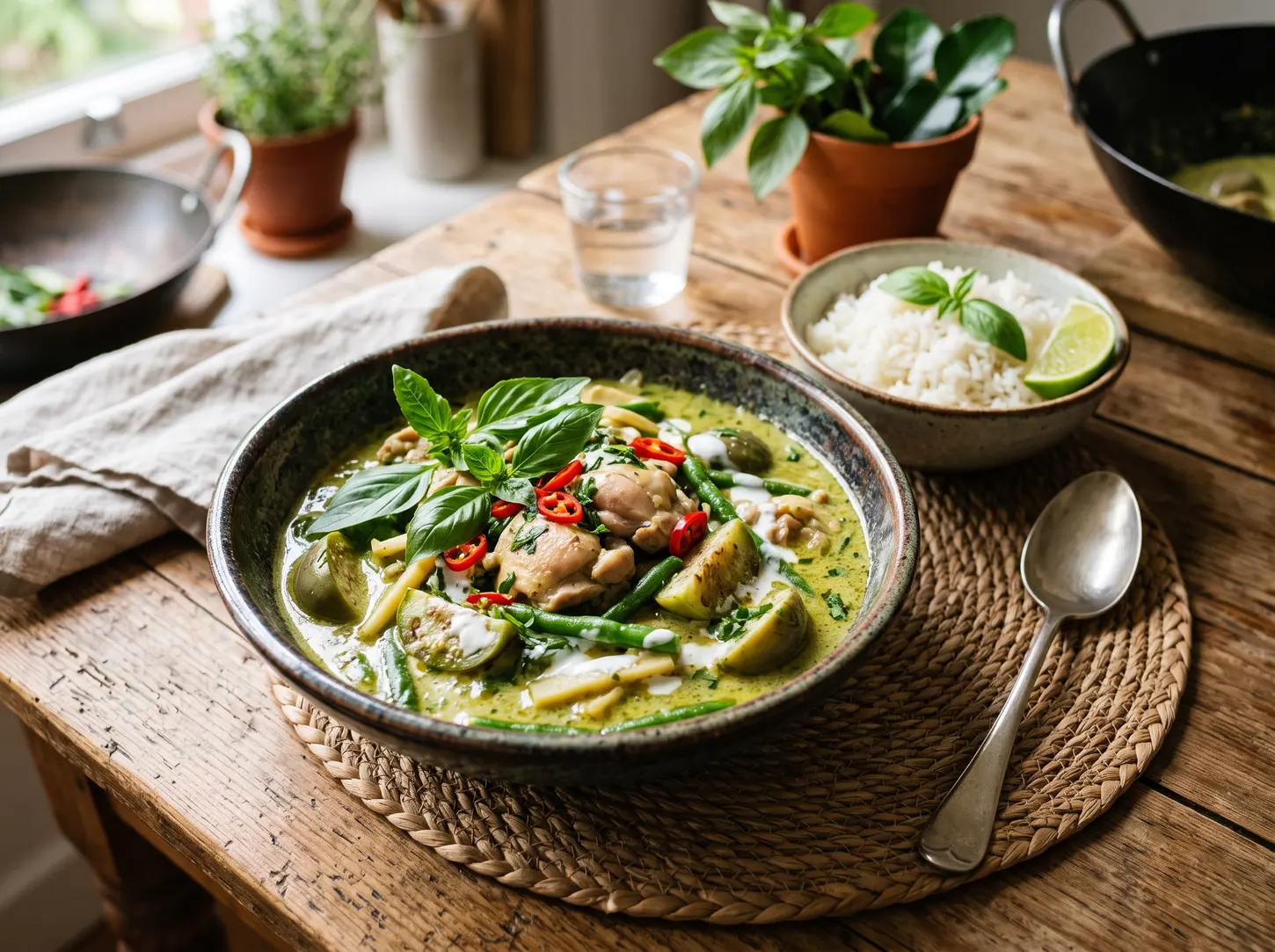
Thai chicken green curry tastes like a lot of work. It isn’t. Fry the paste, add coconut milk and chicken, simmer, then finish with a fistful of Thai basil. About 35 minutes later you’ve got a fragrant, creamy, properly spicy curry that beats most takeaway.
The cut matters. Boneless chicken thighs stay juicy through the simmer and soak up the sauce, which is why most well-tested green curry recipes call for them. This recipe is built around a 500g pack of A Place 2 Meat’s boneless chicken thighs, which are 100% Australian and halal certified.
| Detail | Info |
| Prep time | 15 minutes |
| Cook time | 20 minutes |
| Total time | 35 minutes |
| Serves | 4 (with rice) |
| Difficulty | Easy |
| Best chicken cut | Boneless chicken thighs |
What Is Thai Green Curry?
Green curry, or kaeng khiao wan in Thai, is a coconut milk curry built on a paste of fresh green chillies, lemongrass, galangal, garlic, shallots, makrut lime zest and coriander root. The colour comes from the green chillies and fresh herbs. It’s usually the hottest of the well-known Thai curries, with more kick than red, yellow or massaman.
A good green curry balances that heat with salty fish sauce, a little palm sugar and the richness of coconut milk, then gets lifted at the end with Thai basil. It isn’t a sour dish. Lime is optional, a squeeze at the table if you like it, not a core ingredient.
This is a home-kitchen version. It uses store-bought paste and easy-to-find vegetables, plus a couple of techniques borrowed from Thai cooks that make a real difference to the result.
Why Chicken Thighs Work Best
Thigh meat carries more fat and connective tissue than breast, so it stays tender in a simmering sauce instead of turning dry and stringy. It’s also forgiving. Leave it a couple of minutes too long and it’s still good, and leftovers reheat without going tough.
Boneless thighs make prep quick. Trim any excess fat and cut them into even 2–3cm pieces. Even sizing means every piece finishes cooking at the same time.
You can use breast instead, but it needs a different approach. See the FAQs below.
Ingredients
For the curry
- 500g boneless chicken thighs, cut into 2–3cm pieces
- 1 tablespoon vegetable oil
- 3–4 tablespoons Thai green curry paste
- 1 x 400ml can full-fat coconut milk, unshaken
- 1 cup (250ml) salt-reduced chicken stock
- 1–2 tablespoons fish sauce
- 2 teaspoons grated palm sugar or brown sugar
- 4–5 makrut lime leaves, torn
- 4–6 Thai eggplants, quartered (or 1 small regular eggplant, cubed)
- 1 cup snow peas or green beans, trimmed
- ½ cup sliced bamboo shoots, drained and rinsed (optional)
To finish and serve
- 1 cup Thai basil leaves
- 1 long red chilli, sliced
- Lime wedges (optional)
- Steamed jasmine rice
Ingredient notes
Curry paste. Brands vary a lot in heat and salt. Thai brands from Asian grocers are usually hotter and more intense than supermarket jars. Start with 3 tablespoons of a Thai brand and go to 4 for a milder supermarket paste.
Coconut milk. Don’t shake the can. The thick cream that settles on top is what you’ll fry the paste in.
Chicken stock. Most well-tested green curry recipes use stock alongside the coconut milk. It keeps the sauce pourable and stops it getting too rich. Use salt-reduced, because the paste and fish sauce bring plenty of salt already.
Makrut lime leaves and Thai eggplant. Both are easy to find at Brisbane’s Asian grocers, particularly around Sunnybank and Fortitude Valley. Lime leaves freeze well, so buy a bag and keep them on hand.
How to Make Thai Chicken Green Curry
Step 1: Prep everything first
Cut the chicken, prep the vegetables, and have the paste, fish sauce and sugar measured out. Once the paste hits the pan, this curry moves fast.
Step 2: Fry the curry paste
Spoon about ½ cup of the thick cream off the top of the coconut milk. Heat the oil in a wok or large, deep frying pan over medium heat, then add the coconut cream and curry paste. Stir constantly for 2–3 minutes. It’s ready when it smells fragrant, darkens slightly, and you can see small pools of green oil around the edges.
Don’t skip this step. Frying the paste in fat is what releases its aromatics, and without it the curry tastes flat. Keep it moving so it doesn’t catch, because burnt paste turns the whole dish bitter.
Step 3: Coat the chicken
Add the chicken and stir until every piece is coated in the paste. Cook for about 2 minutes. You’re not trying to brown it, just get the paste onto the meat.
Step 4: Add the liquid and seasoning
Pour in the rest of the coconut milk and the chicken stock. Add 1 tablespoon of fish sauce, the palm sugar and the torn lime leaves. Bring to a gentle simmer, with small bubbles rather than a rolling boil.
Step 5: Simmer with the vegetables
Add the eggplant (and bamboo shoots, if using) and simmer for about 8 minutes, until the eggplant is tender. Add the snow peas or beans for the last 2–3 minutes so they keep their crunch.
The chicken is done when the thickest piece reaches 75°C. For 2–3cm pieces that’s about 10–12 minutes of total simmering.
Step 6: Taste and adjust
Taste before you add anything else. Adjust in small amounts:
| If it tastes… | Add |
| Flat or under-seasoned | A little more fish sauce |
| Too hot | A splash more coconut milk or stock |
| Too salty or sharp | A pinch more palm sugar |
| Too thick | A splash of stock |
| Not hot enough | Sliced fresh chilli |
Step 7: Finish with Thai basil
Take the pan off the heat and stir through most of the Thai basil. It wilts in seconds and loses its aroma if it cooks for long. Top with the remaining basil and sliced red chilli, and serve with jasmine rice and lime wedges on the side.
Tips for a Better Green Curry
Keep it at a gentle simmer. Thai cooks deliberately split the coconut cream when frying the paste. Once the rest of the liquid is in, though, a hard boil makes the sauce greasy and grainy.
Season late. The paste is already salty. Add fish sauce gradually and taste between additions.
Don’t overcook the chicken. Once it hits 75°C it’s done. More simmering won’t improve it.
Add the vegetables in stages. Eggplant needs time to soften. Snow peas and beans need only a couple of minutes. If everything goes in at once, something ends up mushy.
Don’t overload the pan. Two or three vegetables is plenty. They should support the chicken and sauce, not bury them.
How Spicy Is Thai Green Curry?
It ranges from moderately hot to very hot, depending mostly on the paste. If you’re trying a new brand, start with the lower amount and add more after tasting.
To make it milder: use 2 tablespoons of paste, add a little extra coconut milk, leave out the fresh chilli garnish, and serve with plenty of rice.
To make it hotter: increase the paste a tablespoon at a time, add sliced green chilli in the last few minutes of simmering, or put extra chilli on the table so everyone can set their own heat.
What Vegetables Go in Green Curry?
Thai eggplant is the traditional choice. These small, round, slightly bitter eggplants soak up the sauce well. Regular eggplant cut into cubes is a fine substitute.
Snow peas and green beans add colour and crunch, and they cook in minutes.
Bamboo shoots bring a firm, slightly earthy bite. Tinned is fine; just drain and rinse them first.
Zucchini, capsicum and baby corn are easy supermarket options that hold up well in the sauce.
Pick two or three, ideally one soft and one with crunch.
What to Serve with Thai Chicken Green Curry
Steamed jasmine rice is the classic pairing. It soaks up the sauce and takes the edge off the heat. Thin rice noodles or roti also work well for mopping up the sauce.
To round out a bigger meal, add a quick cucumber salad or some steamed Asian greens like bok choy or gai lan.
Making Ahead, Storing and Reheating
Green curry is often better the next day, once the flavours have had time to settle.
Storing: Cool the curry and refrigerate it within two hours of cooking, in an airtight container. It keeps for up to three days. Store rice separately, and cool and refrigerate cooked rice promptly, because leftover rice is a common food-safety risk if it sits out.
Reheating: Warm the curry gently in a saucepan over medium-low heat, stirring occasionally, until it’s steaming hot throughout (75°C). Add a splash of stock if it’s thickened up.
Freezing: The curry freezes for up to three months, but coconut sauces can look slightly split after thawing and the eggplant goes softer. Stir it well while reheating. If you’re cooking for the freezer, add the basil only when you reheat.
Thai Chicken Green Curry FAQs
Can I use chicken breast instead of thighs?
Yes, but cut it slightly larger and add it after the liquid comes to a simmer rather than frying it with the paste. Simmer for 5–6 minutes, until it reaches 75°C, then take the pan off the heat. Breast dries out quickly, which is why thighs are the better choice for this curry.
Can I use store-bought green curry paste?
Absolutely. Most home cooks do, including plenty of cooks in Thailand. Frying the paste properly is what makes a jar taste fresh.
What’s the difference between green and red curry?
Red curry paste is made with dried red chillies and tastes deeper and slightly milder. Green curry uses fresh green chillies and herbs, so it’s fresher and usually hotter.
What can I use instead of Thai basil?
Regular basil with a few coriander leaves is the closest easy swap. You’ll lose some of Thai basil’s aniseed note, but it still works.
What can I use instead of makrut lime leaves?
A couple of wide strips of lime zest, added with the coconut milk and removed before serving. It gives you the citrus note, though not the same floral aroma.
Can I make green curry without fish sauce?
Use soy sauce or tamari instead, adding it gradually. Many green curry pastes contain shrimp paste, so check the label if you’re avoiding seafood entirely.
Why is my green curry watery?
Usually it’s too much stock or a light coconut milk. Simmer uncovered for a few minutes to reduce it, and stick with full-fat coconut milk next time.
Why is my green curry too salty?
The paste and fish sauce both add salt. Add a splash of coconut milk, a pinch of palm sugar and some extra vegetables to balance it out. Next time, add the fish sauce at the end, after tasting.
Get Your Chicken Thighs from A Place 2 Meat
One 500g pack of A Place 2 Meat boneless chicken thighs is exactly what this recipe needs. Grab the 1kg pack and you can double the curry for leftovers, or use the rest for our teriyaki chicken, which is another quick weeknight win with thighs.
All our chicken thighs are 100% Australian and halal certified. Order online with click and collect, or come and see us in store at Newmarket Village.
A Weeknight Curry Worth Making from Scratch
Thai chicken green curry is quick, adaptable and hard to stuff up once you’ve got the basics down. Fry the paste properly, keep the simmer gentle, season at the end and finish with plenty of Thai basil.
Start with good chicken and the rest follows. Order A Place 2 Meat’s boneless chicken thighs online and have dinner sorted tonight.