
About Us
Our meat is always fresh, hand-cut, delicious and prepared with care. We pride ourselves on the quality of meat we sell to our customers because we value you!
Contact Info
- 110/400 Newmarket Road, Newmarket QLD 4051
- +0738564216
- 110/400 Newmarket Road, Newmarket QLD 4051
- +0738564216
How to Store Christmas Ham
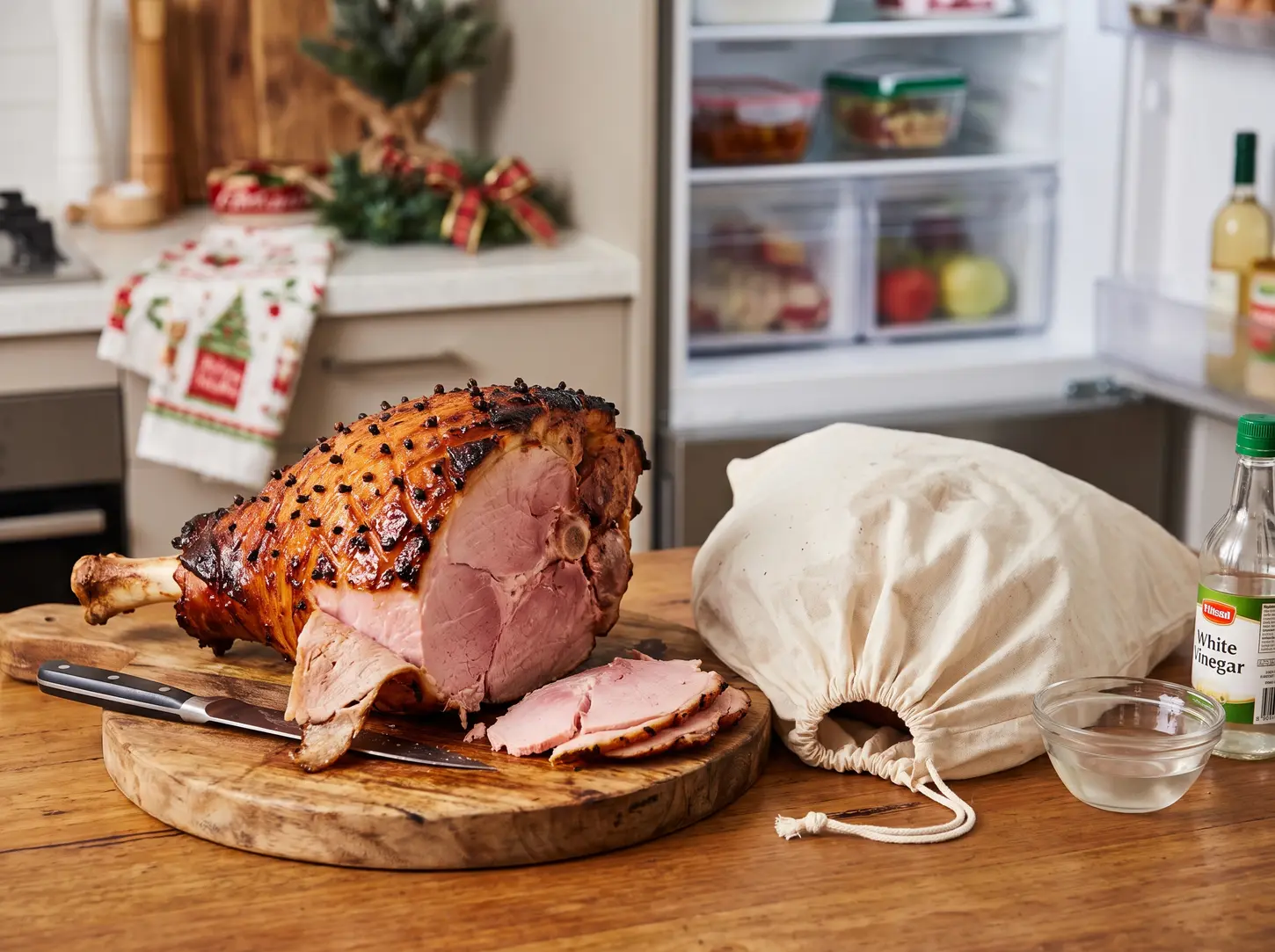
Christmas in Brisbane means a big leg ham on the table, a fridge packed to the door with drinks, salads and seafood, and a Christmas Day that can easily push past 30°C. That’s a tough setting for a ham.
Store it properly and one leg will keep you in ham sandwiches through Boxing Day and well into the new year. Get it wrong and it dries out, turns slimy, or ends up in the bin a few days later.
This guide covers how to store Christmas ham from start to finish: before Christmas, on the day, in the fridge afterwards, and in the freezer for whatever you can’t get through. We’re A Place 2 Meat, a butcher in Newmarket serving all of Brisbane.
Quick Answer: How to Store Christmas Ham
Keep your ham in its original packaging until you need it. Once it’s opened, wrap the whole leg in a cotton ham bag, pillowcase or tea towel soaked in 1 litre of water mixed with 2 tablespoons of white vinegar. Store it in the coolest part of a fridge running at 5°C or colder, re-soak the bag every three days, carve only what you need, and freeze any surplus early.
Storing Christmas Ham Before the Big Day
Good ham storage starts well before anyone picks up a carving knife. The days leading up to Christmas are when fridges are fullest and kitchens are busiest, so a bit of planning goes a long way.
Timing Your Ham Order or Pick-Up
If your fridge is already bursting, there’s no reason to have a whole leg ham taking up a shelf for a week before Christmas. Plan to collect your Christmas leg ham, or have it delivered, closer to the day so it goes straight from cold storage to your fridge with the least time in between.
We offer delivery across Brisbane as well as click and collect from our Newmarket shop, so you can pick the option that suits your Christmas week.
Getting Your Ham Home in the Brisbane Heat
A Brisbane car in December gets hot fast. Treat your ham the same way you’d treat fresh seafood on the drive home:
- Bring an esky with ice bricks
- Make the butcher your last stop, then head straight home
- Never leave the ham sitting in a parked car while you finish the rest of the Christmas shopping
Once you’re home, the ham goes into the fridge before the groceries are unpacked.
Keep It in Its Packaging Until You Need It
An unopened ham is at its most protected in the packaging it came in. Before you take the plastic off, the Food Safety Information Council recommends reading the packaging label, checking for storage instructions and the use-by or best-before date. Those instructions are specific to that ham and should always come first.
Leave it sealed until you’re ready to glaze it, bake it or carve it.
Make Room in the Fridge
An overloaded fridge struggles to stay cold. When every shelf is crammed, air can’t move around the food and the temperature creeps up, especially with the door opening every few minutes on Christmas Day.
A few easy wins:
- Move drinks into an esky or a second fridge
- Clear out old jars and leftovers in the week before Christmas
- Plan where the ham will sit before it arrives
Opening the fridge less often helps too. A drinks esky on the back deck saves the main fridge a lot of work.
Check Your Fridge Is at 5°C or Below
Ham needs to be kept at 5°C or colder. Most people have no idea what temperature their fridge actually runs at, and a cheap fridge thermometer takes the guesswork out of it.
On hot days and through the Christmas period, when the door is opening constantly, it’s worth setting the fridge a degree colder than usual.
Know What Kind of Ham You’re Storing
Not every ham keeps for the same length of time. Before you work out how long yours will last, it’s worth knowing what you’ve actually got.
Leg Ham on the Bone vs Half Ham and Boneless Ham
A leg ham on the bone keeps longer than ham that’s been sliced or taken off the bone. Australian Pork recommends leaving the ham on the bone and slicing off only what you need each time.
The less cut surface you expose, the less the meat dries out and the fewer chances there are for bacteria to get in. A whole or half leg on the bone is the best option if you want ham that lasts through the holidays.
Cooked and Smoked Ham vs Uncooked Ham
Check your label to see whether your ham is ready to eat or needs cooking first. Hams are sold both ways. A ready-to-eat ham only needs warming through if you’re glazing it, while an uncooked ham has to be cooked properly before anyone eats it.
Uncooked ham has a shorter fridge life, so follow the storage directions on the label rather than the general guide for leg ham.
Reduced-Salt Hams Don’t Keep as Long
Salt is part of what keeps ham fresh. The Food Safety Information Council notes that reduced-salt hams won’t last as long as conventional hams, so follow the packaging instructions closely if that’s what you’ve bought.
Ham You’ve Already Glazed and Baked
We cover everything you need to know about glazing a Christmas ham in a separate guide. Once yours has been glazed and baked, prep it before it goes back into storage. Pull out the cloves, take off any pineapple or other garnishes, and scrape off any glaze that’s pooled around the base. Those extras don’t keep as well as the ham itself.
How to Store Christmas Ham in a Ham Bag
The ham bag is the classic Aussie way to store a leg ham, and for good reason. It’s cheap, simple and it works.
What a Ham Bag Is and Why It Works
A ham bag is a cotton or calico bag sized to fit a leg ham. When it’s dampened with a vinegar solution, it keeps the surface of the ham from drying out while still letting it breathe.
That’s the key difference from plastic wrap. Wrap a whole leg tightly in plastic and moisture gets trapped against the meat. The ham sweats, and the surface turns slimy far sooner than it should.
How to Make the Vinegar Solution
Mix 1 litre (4 cups) of cold water with 2 tablespoons of white vinegar. That’s enough to soak a ham bag, pillowcase or tea towel through, and a mild mix like this is all you need.
Make up a fresh batch each time you re-soak the bag.
Step-by-Step: How to Bag Your Ham
- Wash the ham bag (or cloth) before its first use.
- Soak it in the vinegar solution until it’s wet through.
- Wring it out well. You want it damp, not dripping.
- Lay the rind or skin back over the cut face of the ham.
- Slide the ham into the bag and tuck the open end underneath.
- Store it in the coolest part of the fridge, above and well away from any raw meat.
That last point matters. Ham is ready to eat, so it should never sit where juices from raw meat could drip onto it. Raw meat belongs on the lowest shelf.
Re-Soak the Bag Every Three Days
A ham bag only works while it’s damp. Australian Pork recommends rinsing the bag and re-soaking it in fresh solution every three days, or sooner if it dries out.
Set a reminder on your phone if you need to. A dry bag lets the ham dry out, and that’s when quality drops fast.
No Ham Bag? Use a Pillowcase or Tea Towel
If you don’t have a ham bag, a clean cotton pillowcase or large cotton tea towel does the same job. Prepare it exactly the same way: soak it in the vinegar solution, wring it out, wrap the ham and refrigerate.
Use a plain cotton one and skip anything washed in heavily perfumed fabric softener. You don’t want your ham tasting like the linen cupboard.
Should You Keep the Rind On?
If you’re serving your ham cold without glazing it, yes. Start by cutting through the rind (not into the fat) around the leg about 10cm from the hock. Then peel back only as much rind as you need to expose the section you’re carving, leaving the rest attached to the leg. After each carving, fold the flap back down over the cut face.
The rind acts as a natural lid. It protects the exposed meat from drying out and gives the ham an extra layer of cover inside the bag.
If you’ve glazed your ham, the rind came off before it went in the oven, so there’s nothing to lay back. The glazed fat does some of the same job, and a properly damp ham bag does the rest.
How Long Does Christmas Ham Last in the Fridge?
This is the question everyone asks on Boxing Day. The answer depends on what type of ham you have and how you store it. The label on your ham always comes first, but here’s a general guide:
| Ham | How it’s stored | Fridge guide |
| Unopened, packaged ham | In its original packaging | Follow the use-by date on the label |
| Whole or half leg ham on the bone | In a ham bag re-soaked every three days, at 5°C or below | Up to 2 weeks |
| Ham sliced off the bone | Airtight container or well wrapped | 2–3 days |
| Dishes made with leftover ham (fried rice, quiche, pasta) | Sealed container | 2–3 days |
| Boneless ham or smaller ham portions (opened) | Wrapped or in an airtight container | Follow the label; if there’s no guidance, treat it like sliced ham (2–3 days) |
| Reduced-salt ham | As per the label | Shorter than conventional ham; follow the label |
Australian Pork says a leg ham stored in a ham bag will keep in the fridge for up to two weeks. The Food Safety Information Council says leg ham can keep for several weeks with proper handling, but two weeks is the sensible guide to work to.
Sliced ham and dishes made with ham are a different story. Queensland Health advises that leftovers generally last two to three days in the fridge.
We cover storage times for every other cut in our guide on how long meat lasts in the fridge and freezer.
Why Ham on the Bone Lasts Longer
A leg ham on the bone has a small cut surface compared with the amount of meat. Most of it stays protected by the rind, the fat and the bone itself.
Slice it all off and you’ve suddenly got dozens of exposed surfaces. Each slice can dry out and pick up bacteria from hands, knives and containers. That’s why carving to order beats carving the lot on Christmas Day.
What Shortens Your Ham’s Fridge Life
The two-week guide assumes you’re doing everything right. These are the habits that cut it short:
- A fridge running warmer than 5°C
- Leaving the ham out on the table for hours at a time, or for lots of shorter stretches that add up
- Handling it with unwashed hands or dirty knives
- Letting the ham bag dry out
- Carving the whole leg in one go
Handling Ham Safely on Christmas Day
Christmas Day is when ham is most at risk. It’s out of the fridge, people are picking at it, and a Brisbane afternoon is doing it no favours.
How Long Can Ham Sit Out on the Table?
Food Standards Australia New Zealand’s 2-hour/4-hour rule is a handy guide for ready-to-eat food like ham:
- Under 2 hours out of the fridge: put it back in the fridge or eat it
- Between 2 and 4 hours: eat it, but don’t put it back in the fridge
- More than 4 hours: throw it out
The clock is cumulative. Twenty minutes on the bench while you carve, an hour on the lunch table, then another stretch out on Boxing Day all add up to the same total. With a leg ham coming in and out of the fridge for days, that’s easy to lose track of. The less time it spends out, the longer it lasts.
Brisbane’s Metro North Health calls the range between 5°C and 60°C the danger zone. On a hot Brisbane day, ham warms into that zone quickly, so aim to get it back in the fridge well inside the 2-hour mark.
Carve as You Go
The simplest way to keep ham safe on Christmas Day is to keep the leg in the fridge. Carve a platter’s worth, put the leg back, and top up the platter as it empties.
Use a clean knife and a clean board every time, and keep the ham away from boards and utensils used for raw meat or raw seafood.
Taking Ham to a Park, Beach or Family Lunch
If Christmas lunch is at the park, the beach or a relative’s place across town, the esky does the job of the fridge:
- Pack plenty of ice or ice bricks, more than you think you’ll need
- Keep the esky in the shade with the lid shut
- Pack the ham last so it’s the first thing out, and the first thing back in
When you get home, the 2-hour/4-hour rule still applies. Any ham that sat out of the esky long enough to warm up isn’t worth saving.
How to Store Sliced and Leftover Ham
Not all leftover ham stays on the bone. Here’s how to deal with the rest.
Storing Sliced Ham
Sliced ham should go into an airtight container, or be wrapped well, as soon as possible. Keep it on a shelf above any raw meat and use it within two to three days.
If you’ve got more sliced ham than you can get through in that time, freeze some now rather than waiting.
Storing Ham You’ve Glazed and Baked
A freshly baked ham shouldn’t sit on the bench to cool for hours. Queensland Health’s advice is to refrigerate leftovers straight away, or once the food has stopped steaming.
Remove the garnishes, let the ham stop steaming, then get it into the fridge in a damp ham bag. Any meat you’ve already carved off goes into a sealed container.
Reheating Leftover Ham
Leftover ham is great cold, but if you’re reheating it, make sure it’s hot all the way through. Queensland Health suggests stirring or turning food halfway through reheating so it heats evenly.
Only reheat the leftovers you plan to eat, and only reheat them once. Once leftover ham has been reheated, finish it. Don’t chill it and reheat it again later.
Can You Freeze Christmas Ham?
Yes, and it’s the best way to deal with a ham that’s bigger than your family’s appetite.
What Freezing Does to Ham
Ham freezes well, but it isn’t quite the same once it’s thawed. The texture can turn softer and a little wetter, which is why frozen ham is best used for cooking rather than served in thick slices on a platter.
For soups, fried rice, pasta and toasties, you won’t notice the difference.
How to Freeze Ham
- Freeze it while it’s still fresh, not at the end of its fridge life
- Cut the meat off the bone into meal-sized portions
- Pack it into freezer bags or airtight containers and squeeze out as much air as possible
- Label every bag with the date it went into the freezer
Freezing in portions means you only thaw what you need. A single big block of frozen ham is awkward to use and tends to get forgotten at the back of the freezer.
How Long Ham Keeps in the Freezer
For the best quality, use frozen ham within about three months. It doesn’t become unsafe after that if it’s stayed frozen the whole time, but it does lose flavour and texture the longer it sits.
Don’t Toss the Ham Bone
Once the leg is carved clean, the bone is still full of flavour. Bag it up and freeze it for a pot of pea and ham soup or a batch of stock when the weather finally cools down.
Thawing Frozen Ham Safely
Thaw frozen ham in the fridge or in the microwave, never on the kitchen bench. A bench in a Brisbane kitchen in January is exactly the kind of warm spot bacteria love.
Once ham has been thawed, don’t refreeze it. Use ham thawed in the fridge within a couple of days, and use ham thawed in the microwave straight away.
Ways to Use Frozen Ham
- Pea and ham soup
- Fried rice
- Quiche and frittata
- Pasta, from carbonara-style dishes to creamy bakes
- Toasties and jaffles
How to Tell If Your Christmas Ham Has Gone Off
Even a well-stored ham won’t last forever. Here’s what to watch for.
Signs Your Ham Is Past It
- A slimy or tacky surface that isn’t from the glaze
- A sour or off smell
- Mould
- Grey or green discolouration
If you see any of these, the ham goes in the bin. Don’t cut off the bad bits and keep the rest.
What About the Rainbow Sheen on Sliced Ham?
You’ve probably noticed a shimmery, rainbow-like sheen on sliced ham at some point. That comes from light reflecting off the cut muscle fibres, and on its own it isn’t a sign that the ham has gone off.
If the sheen comes with any of the warning signs above, such as sliminess, an off smell or discolouration, throw the ham out.
If in Doubt, Throw It Out
Don’t rely on the sniff test. Queensland public health units have warned that it isn’t a reliable way to check food, because the bacteria that cause food poisoning often don’t change how food smells or tastes.
And never eat ham past its use-by date, no matter how good it looks.
Who Should Take Extra Care
Some people are more vulnerable to food poisoning, including pregnant women, older people, young children and anyone with a weakened immune system. Food Standards Australia New Zealand advises these groups to eat cold, ready-to-eat sliced meats like ham only if they’re freshly cooked or reheated until steaming hot (75°C). Listeria can grow slowly even in the fridge, so for anyone in these groups, hot ham is the safer choice. Check with your doctor or midwife if you’re unsure what’s safe.
Common Christmas Ham Storage Mistakes
Most ham that ends up in the bin early comes down to one of these:
- Wrapping a whole leg tightly in plastic wrap, which traps moisture and makes the surface slimy
- Letting the ham bag dry out between soaks
- Leaving the ham on the table all afternoon
- Overloading the fridge so it can’t stay cold
- Carving the whole leg on Christmas Day instead of slicing as you go
- Storing ham below or beside raw meat
- Waiting until the ham is nearly done before freezing it
- Refreezing ham that’s already been thawed
Avoid these and your ham will go the distance.
Frequently Asked Questions
How long does Christmas ham last in the fridge?
A leg ham on the bone stored in a ham bag at 5°C or below will keep for up to two weeks, as long as you re-soak the bag every three days. Sliced ham and leftover dishes made with ham should be eaten within two to three days. Always check the label on your ham first.
What do you soak a ham bag in?
Soak it in 1 litre (4 cups) of water mixed with 2 tablespoons of white vinegar, then wring it out until it’s damp but not dripping.
How often should you change or re-soak a ham bag?
Rinse and re-soak the bag in fresh solution every three days, or sooner if it starts to dry out.
Can you store ham in plastic wrap or foil?
For sliced ham or small pieces, wrapping well or using an airtight container is fine, but eat it within two to three days. For a whole leg, plastic wrap traps moisture and makes the surface sweaty and slimy, so a damp ham bag is the better option.
Can you freeze a whole leg ham?
It’s much better to cut the meat off the bone and freeze it in meal-sized portions. A whole leg takes up a lot of freezer space and is hard to thaw evenly. Freeze the bone separately for soup.
Can you eat ham after the use-by date?
No. A use-by date is about safety, so ham shouldn’t be eaten after it. A best-before date is about quality. Food can still be safe after its best-before date if it’s been stored properly and isn’t damaged or deteriorating.
Is ham safe if it’s been left out overnight?
No. Ham that’s been out of the fridge for more than four hours should be thrown out, and on a warm Brisbane night it’s well past that.
Should you store ham with the rind on or off?
Keep it on. Peel back only the section you’re carving, then fold the rind back over the cut face afterwards. It protects the meat and helps stop it drying out. If you’ve glazed the ham, the rind is already off, so rely on a well-soaked ham bag.
Can you refreeze ham?
Don’t refreeze ham once it’s been thawed. Freeze it in portions so you only thaw what you’ll use.
Get Your Christmas Leg Ham From A Place 2 Meat
Great storage starts with a great ham. Our Leg Ham is made for the Christmas table. Check the product page for the sizes available, or give us a call if you’re not sure which suits your crowd.
Glaze it for Christmas Day, then use the storage tips above to keep it going into the new year. While you’re ordering, have a look through our pork range for the rest of your Christmas spread.
Order online for delivery across Brisbane, or choose click and collect and pick up from our shop at 110/400 Newmarket Road, Newmarket. Got questions about your Christmas order? Get in touch or call us on (07) 3856 4216.
Christmas comes around fast, so lock in your Leg Ham today.