
About Us
Our meat is always fresh, hand-cut, delicious and prepared with care. We pride ourselves on the quality of meat we sell to our customers because we value you!
Contact Info
- 110/400 Newmarket Road, Newmarket QLD 4051
- +0738564216
- 110/400 Newmarket Road, Newmarket QLD 4051
- +0738564216
Karaage Chicken (Japanese Fried Chicken)
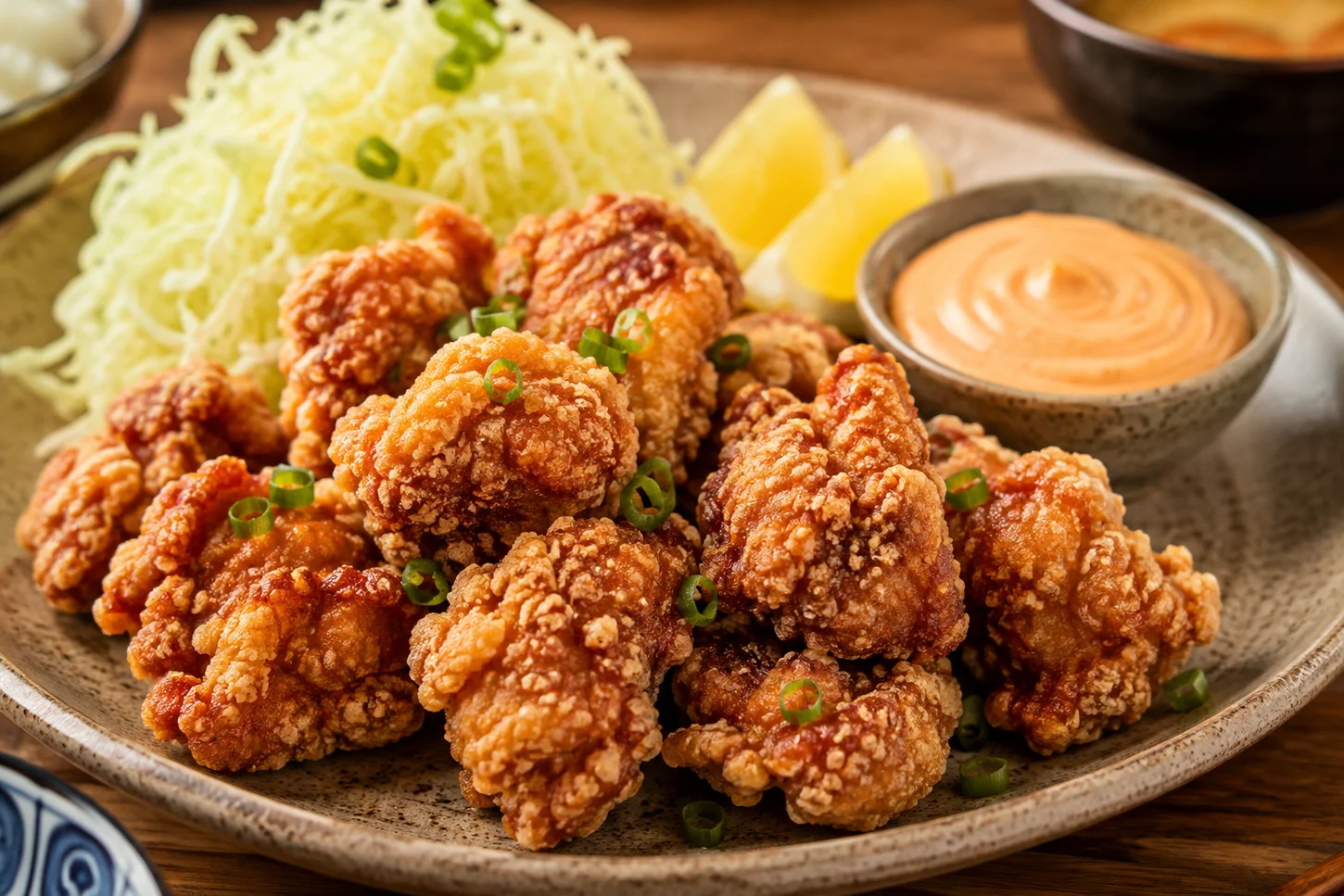
There’s a particular sound that tells you karaage chicken has been done properly. It’s the crackle when you bite through that pale, craggy potato starch coating into hot, juicy chicken thigh underneath. Underneath the crunch sits a savoury ginger and garlic marinade that has had time to work its way through the meat, and beside it, a bowl of creamy, spicy Kewpie dipping sauce waiting to cut through all that richness.
Karaage is Japanese-style fried chicken, and it has earned its reputation. Bite-sized pieces of marinated chicken, coated in starch and fried until golden, served hot with a wedge of lemon. It’s the sort of thing you’ll find at izakayas, in bento boxes and at family dinner tables across Japan, and it translates beautifully to a Brisbane kitchen.
The cut does most of the heavy lifting here. Chicken thighs stay juicy through frying in a way breast meat simply doesn’t, and their richer flavour stands up to the soy, ginger and garlic in the marinade. That’s why this karaage chicken recipe is built around A Place 2 Meat Free Range Chicken Thighs — boneless, hand-cut, and the hero of the whole dish.
We’ve also included an optional Spicy Kewpie Dipping Sauce. Four ingredients, two minutes, and it turns a plate of crispy chicken thighs into something people hover around.
This one works for:
- Family dinners on a weeknight
- Weekend cooking when you’ve got time to fry properly
- Sharing plates and grazing boards
- Parties and entertaining
- Japanese-inspired meals with rice, slaw and miso soup
What Is Karaage Chicken?
Karaage (から揚げ) is a Japanese frying method. The name refers to frying food without a wet batter, which is what separates it from tempura. In practice, when someone in Japan says karaage, they almost always mean chicken karaage — tori no karaage.
The preparation follows a consistent pattern:
- Chicken is cut into bite-sized pieces, usually 30–40 g each
- The pieces are marinated in savoury aromatics such as soy sauce, ginger and garlic
- Each piece is coated in starch rather than a wet batter
- The chicken is fried until crisp and golden
That’s why it’s commonly described as Japanese fried chicken. The result is recognisably fried chicken, but the route there is different.
Western fried chicken usually relies on a seasoned flour dredge, sometimes buttermilk, and often larger bone-in pieces. The coating tends to be thicker and more bread-like. Karaage keeps things lighter. The starch coating is thin and shatters rather than crunches, and the flavour lives inside the meat because of the marinade rather than on the outside in the seasoning.
The smaller pieces matter for more than just cooking time. Bite-sized karaage is built for dipping. Every piece is a single mouthful with enough surface area to carry a good amount of spicy mayonnaise, which is exactly why the Kewpie sauce below works so well alongside it.
Why Use Chicken Thighs for Karaage?
Ask anyone who makes karaage regularly and they’ll tell you the same thing: thighs.
Chicken thigh is a working muscle with more intramuscular fat than breast meat. That fat does three things during frying:
- Juiciness — the fat renders slowly and keeps the meat moist while the outside crisps
- Richer flavour — thigh meat has a deeper, more savoury taste that holds up against soy, ginger and garlic
- Tender texture — the connective tissue and fat give thigh meat that soft bite karaage is known for
- Resistance to drying — there’s a much wider margin between “cooked” and “dry” than there is with breast
That last point is the practical one. Frying is fast and hot, and breast meat goes from perfect to chalky in under a minute. Thigh meat gives you room to move.
Boneless thighs are the easy choice for karaage. You skip the bone work entirely and go straight to cutting bite-sized pieces, which is the only prep the chicken really needs. Aim for pieces of a similar size — around 30–40 g each, or roughly the size of a large walnut. Uniform pieces cook at the same rate, so you’re not pulling one piece out golden while another is still pale in the middle.
A Place 2 Meat Free Range Chicken Thighs
When a recipe has this few ingredients, the chicken isn’t a component. It’s the dish.
Our Free Range Chicken Thighs are boneless, hand-cut on-site and free from added hormones, which makes them a straightforward pick for karaage. There’s no trimming marathon, no surprise gristle, and the pieces cut cleanly into even bite-sized portions.
You’ll notice the difference most in the finished plate. Good free range thigh meat holds its juiciness through the fryer and takes on the ginger and garlic marinade without needing to be over-seasoned to taste like something.
If you’re putting together a karaage night, start with our Free Range Chicken Thighs and you’ve already done the hardest part of the recipe.
Ingredients for Karaage Chicken
Short list, and every item on it is doing a specific job.
Chicken
A Place 2 Meat Free Range Chicken Thighs — 1 kg, boneless
Boneless thighs are the easiest starting point for bite-sized karaage. One kilogram feeds about four to five people as a main with rice and sides, or six to eight as a sharing plate. Browse the full range in our chicken section if you’re stocking up.
Karaage Marinade
| Ingredient | Amount | What it does |
| Soy sauce | 3 tbsp | Salt and umami; seasons the meat all the way through |
| Fresh ginger, finely grated | 2 tbsp | The signature karaage aroma; also helps tenderise |
| Fresh garlic, finely grated | 1 tbsp | Savoury depth behind the ginger |
| Toasted sesame oil | 2 tsp | Nutty background note |
| Mirin or sake | 2 tbsp | Softens the meat, adds subtle sweetness, rounds out the soy |
| Caster sugar (optional) | 1 tsp | Balances the salt and encourages colour in the fry |
Grate the ginger and garlic rather than chopping them. Grated aromatics release far more juice, and that juice is what actually penetrates the meat. Chopped pieces tend to sit on the surface and scorch in the oil.
The marinade flavours the chicken from the inside out, which is the whole point of karaage. You’re not relying on a seasoned crust — by the time the chicken hits the oil, the meat itself is already seasoned.
Crispy Coating
Potato starch (katakuriko) — about 1 cup (150 g)
Potato starch is the traditional choice and it’s the reason karaage looks the way it does. The granules are coarser than most starches, so they fry up into a pale, slightly rough coating that shatters when you bite it. It also stays noticeably white rather than browning heavily, which is that classic karaage look.
Cornflour (cornstarch) works as a substitute if potato starch isn’t in the cupboard. The particles are finer, so you’ll get a thinner, smoother, lighter crust rather than the craggy texture potato starch gives. Still crispy, just a different kind of crispy.
| Coating | Texture | Appearance |
| Potato starch | Coarse, craggy, shattering crunch | Pale, uneven, traditional |
| Cornflour | Finer, smoother, lighter crisp | Slightly more even browning |
| 50/50 potato starch and plain flour | Softer, more substantial crust | Deeper golden colour |
Oil for Frying
Neutral oil suitable for deep frying — about 1.5 litres
Vegetable, canola, rice bran or peanut oil all work. You want a high smoke point and a flavour that stays out of the way.
Temperature control is the single biggest factor in how your karaage turns out. Oil that’s too cool means the coating soaks up fat before it sets, and you end up with greasy, heavy chicken. Oil that’s too hot browns the outside before the centre is cooked through. A kitchen thermometer takes the guesswork out of it entirely.
Optional Garnishes
- Fresh lemon wedges — the traditional finish, and genuinely worth it
- Sliced spring onion
- Toasted sesame seeds
- Shichimi togarashi (Japanese seven-spice)
How to Make Karaage Chicken
1. Prepare the Chicken Thighs
Trim off any loose fat or connective tissue you don’t want in the finished dish, though thigh fat renders well so there’s no need to be aggressive about it.
Pat the thighs dry with paper towel. Surface moisture is the enemy of a good coating, and this is the first place it gets managed.
Cut the chicken into bite-sized pieces of roughly 30–40 g. Uniform pieces are the difference between a plate where everything is perfect and a plate where you’re checking each piece individually. Pieces that are too small dry out and toughen; pieces that are too large brown outside before the centre reaches temperature.
2. Prepare the Karaage Marinade
In a large bowl, combine the soy sauce, grated ginger, grated garlic, sesame oil, mirin or sake, and the optional sugar.
Whisk or stir thoroughly until the sugar has dissolved and the grated aromatics are evenly distributed. You want a consistent mixture rather than pockets of concentrated garlic sitting at the bottom.
This marinade seasons the chicken from the inside. Salt from the soy sauce draws into the meat, the mirin or sake softens it slightly, and the ginger and garlic carry the aroma right through each piece rather than sitting only on the surface.
3. Marinate the Chicken
Add the chicken pieces to the marinade. Toss with your hands or tongs until every piece is thoroughly coated — get in there and massage it a little, it makes a difference.
Cover the bowl and refrigerate for 1 hour. Thirty minutes is the practical minimum if you’re short on time, and you can push it to 4 hours for a stronger ginger and garlic flavour.
Marinating isn’t optional if you want karaage rather than plain fried chicken thighs. It’s where the entire flavour profile comes from.
4. Coat the Chicken in Potato Starch
Remove the chicken from the fridge. Lift each piece out of the marinade and let the excess drip off for a few seconds — you want the chicken damp, not wet.
Spread the potato starch in a wide, shallow dish or tray. Roll each piece through the starch, pressing lightly so it adheres to every surface, then shake off the loose excess.
That thin, even layer of starch is what turns into the crisp shell. Excess loose starch just falls off in the oil, burns, and makes the rest of your batches taste bitter.
Let the coated pieces sit for about 5 minutes before frying. This gives the starch time to hydrate slightly and grip the chicken, so it’s far less likely to peel off in the oil.
5. Heat the Oil
Pour the oil into a heavy-based pot or deep fryer to a depth of about 5 cm, leaving plenty of headroom. Heat to 170°C (340°F).
Use a kitchen thermometer. Oil temperature is invisible and the visual cues are unreliable until you’ve fried a lot of chicken.
- Too cool (below about 160°C) — the coating absorbs oil before it crisps, giving you greasy, soggy karaage with a coating that slides off
- Too hot (above about 190°C) — the exterior browns and hardens while the centre is still raw, and the starch can catch and taste burnt
6. Fry the Karaage Chicken
Lower the chicken into the oil in batches, filling no more than about two-thirds of the surface area of the pot.
Leave the pieces alone for the first minute so the coating can set. After that, turn them occasionally with tongs or chopsticks so they colour evenly.
Fry for 5–6 minutes, until the coating is golden and the chicken is cooked through to an internal temperature of 75°C (165°F). Remove carefully with a slotted spoon or spider, letting the excess oil drain back into the pot.
Let the oil come back up to 170°C between batches. It’ll drop by 15–20°C every time you add chicken, and frying the next batch in cool oil is how you get one great plate and one disappointing one.
7. Drain the Chicken
Transfer the cooked karaage to a wire rack set over a tray.
Air circulates underneath a rack, so steam escapes instead of getting trapped. Chicken drained on paper towel sits in its own steam and the bottom of every piece goes soft within a couple of minutes. A rack keeps all sides crisp.
8. Prepare the Spicy Kewpie Dipping Sauce
While the chicken fries or drains, make the sauce. It takes two minutes.
Combine in a small bowl:
- 1/2 cup Kewpie Mayonnaise
- 1–2 tablespoons Sriracha
- A dash of freshly grated garlic
- A squeeze of fresh lemon juice
Stir until completely smooth and evenly coloured. Taste it, then adjust the Sriracha or lemon to suit.
One tablespoon of Sriracha gives you a mild, warm sauce that everyone at the table can eat. Two tablespoons makes it properly spicy with a real kick behind the creaminess.
9. Serve the Karaage Chicken
Pile the hot karaage onto a serving plate. Put the Spicy Kewpie Dipping Sauce in a small bowl on the side, not over the top.
Add lemon wedges, and scatter over spring onion, sesame seeds or shichimi togarashi if you’re using them.
Dip each piece just before eating. That’s the moment the dish works best — the crunch is still intact, the chicken is still hot, and the cool, creamy, spicy mayo hits at the same time. Sauce the whole plate in advance and you lose the crunch within a minute.
How to Make the Spicy Kewpie Dipping Sauce
Kewpie is Japanese mayonnaise, made with egg yolks only and seasoned with rice vinegar, which makes it richer and tangier than standard mayo. It’s the right base for this.
Ingredients
- 1/2 cup Kewpie Mayonnaise
- 1–2 tablespoons Sriracha
- Dash of freshly grated garlic
- Fresh lemon juice, to taste
Method
- Add the Kewpie Mayonnaise to a small bowl.
- Stir in 1 tablespoon of Sriracha.
- Add the freshly grated garlic.
- Squeeze in the fresh lemon juice.
- Mix until smooth and evenly pale orange.
- Taste, and add more Sriracha if you want a hotter sauce.
How to Adjust the Sauce
| Adjustment | What to do |
| Milder | Use 1 tablespoon Sriracha |
| Spicier | Increase to 2 tablespoons |
| More tangy | Add another small squeeze of lemon |
| More garlicky | Add a little extra freshly grated garlic |
This is a sauce you should taste and tune. Sriracha brands vary in heat, lemons vary in acidity, and everyone’s tolerance is different. Start conservative, taste, adjust.
Tips for Crispy Karaage Chicken
Most karaage problems trace back to the same handful of decisions. Get these right and the rest looks after itself.
Cut the Chicken Into Similar-Sized Pieces
Even sizing means even cooking, so every piece finishes at the same time. Stick to 30–40 g. Oversized pieces need longer in the oil, which means the coating is already dark by the time the centre reaches 75°C; pieces cut too small dry out and toughen.
Don’t Skip the Marinade
The marinade is where karaage gets its flavour. Without it you’ve got fried chicken thighs, which is fine, but it isn’t karaage.
Dry the Chicken, Then Drain the Excess Marinade
Surface moisture stops the starch from adhering properly. Pat the thighs dry before cutting, then let each piece drip for a few seconds after it comes out of the marinade. Too much liquid turns the coating into a paste that never crisps and tends to slide off in the oil.
Coat Thoroughly, Then Shake Off the Excess
Every surface should be covered, but shake off what’s loose. A thin, even layer crisps into a shell. A thick, powdery one fries into something claggy, and the loose starch that falls off burns in the oil and taints later batches.
Keep the Oil Temperature Consistent
Use a thermometer and let the oil recover to 170°C between batches. Too cool and the coating absorbs fat before it sets, giving you greasy chicken. Too hot and you get a browned exterior wrapped around an undercooked centre. Patience between batches is worth more than speed.
Don’t Overcrowd the Pan
Fill no more than two-thirds of the oil surface. Adding too much chicken at once drops the temperature sharply, and everything in that batch comes out softer and oilier than it should.
Drain Karaage on a Wire Rack
Steam is what softens a crisp coating. A rack lets it escape from all sides, where paper towel traps it underneath.
Serve the Sauce on the Side, Not Over the Top
Spooning the spicy Kewpie sauce over the karaage will soften the coating almost immediately. Put it in a small bowl and dip each piece just before eating.
Double-Fry for Extra Crispiness
If you want the crispiest possible result, fry twice:
- First fry — 160°C for 3 minutes, until lightly golden. This cooks the chicken most of the way through.
- Rest — 3 minutes on a wire rack. Residual heat carries through to the centre while the surface dries slightly.
- Second fry — raise the oil to 185°C and fry for 30–60 seconds, until deep golden.
The second fry blasts off surface moisture and sets a much harder, crunchier shell. It also gives you a natural break in service, which helps if you’re frying for a crowd.
What to Serve With Karaage Chicken
Spicy Kewpie Dipping Sauce
The featured accompaniment, and the one we’d put on the table first. Kewpie Mayonnaise brings richness, Sriracha brings heat, and together they give you a cool, creamy contrast against hot, crunchy chicken.
Make it while the chicken is frying or draining — it takes two minutes and it’ll be ready before the last batch comes out.
Steamed Japanese Rice
Short-grain rice, plain and hot. It balances the richness of the fried chicken and turns karaage into a proper meal rather than a snack.
Shredded Cabbage or Japanese Slaw
Finely shredded raw cabbage is the standard partner for fried food in Japan for good reason. It’s cold, crunchy and clean-tasting, and it works particularly well next to the creamy dipping sauce.
Miso Soup
A bowl of miso soup rounds the plate into a full Japanese-inspired meal. Warm, savoury and light enough not to compete.
Edamame
Simple, salty, and easy to put in the middle of the table for sharing while the last batch of chicken is still frying.
Pickled Vegetables
Japanese pickles (tsukemono) or quick-pickled cucumber. The acidity resets your palate between pieces of fried chicken and spicy mayo.
Lemon Wedges
Don’t skip these. A squeeze of fresh lemon over hot karaage cuts straight through the richness of both the chicken and the sauce, and it’s the traditional finish in Japan.
Karaage Chicken Dipping Sauce Ideas
Spicy Kewpie Mayo
Our recommended option for this recipe.
- 1/2 cup Kewpie Mayonnaise
- 1–2 tbsp Sriracha
- Grated garlic
- Lemon juice
Japanese Mayonnaise
Straight Kewpie, no additions. The simplest option and the right one if you’re feeding kids or anyone who’d rather skip the heat.
Ponzu-Style Sauce
Soy sauce and citrus. Lighter and sharper than a mayonnaise-based dip, and a good contrast if the mayo feels too rich alongside a big plate of fried chicken.
Sweet Chilli Sauce
Family-friendly sweet heat, and almost certainly already in the fridge. Not traditional, but it works.
Soy-Ginger Dipping Sauce
Soy sauce, grated ginger and a splash of rice vinegar. A savoury option that echoes the marinade rather than contrasting with it.
Karaage Chicken Variations
Spicy Karaage Chicken
Add a pinch of chilli flakes or shichimi togarashi to the marinade, and dust a little more over the chicken as it comes out of the oil.
Extra-Garlic Karaage
Double the grated garlic in the marinade. It’s a common style in Japan and it pairs particularly well with the garlic already in the Kewpie sauce.
Lemon Karaage
Go heavier on the lemon at the finish — a generous squeeze over the whole plate rather than wedges on the side. Bright, sharp, and very good in Brisbane summer weather.
Sesame Karaage
Add toasted sesame seeds and finely sliced spring onion over the top just before serving, with an extra splash of sesame oil in the marinade.
Double-Fried Karaage
Follow the two-stage frying method above for the crunchiest possible coating. Worth the extra step when crispness is the priority.
Can You Make Karaage Chicken Ahead of Time?
Partly, yes — and the prep steps are the ones worth doing early.
What you can do ahead:
- Cut the chicken into bite-sized pieces and keep it covered in the fridge
- Mix the marinade
- Marinate the chicken (1 hour is ideal; up to 4 hours is fine)
- Make the Spicy Kewpie Dipping Sauce and refrigerate it
What’s best done at the last minute:
Frying. Karaage is at its best within minutes of leaving the oil — that’s when the coating is at maximum crispness and the meat is still hot and juicy. Fried chicken that sits around loses its texture no matter how well you’ve cooked it.
If you’re entertaining, the practical approach is to have the chicken marinated, the starch in a tray, the sauce made and chilled, and the sides ready. Then fry in batches as people arrive and serve straight from the rack.
Keep the sauce refrigerated until it goes on the table, and serve it separately so the chicken stays crisp.
How to Store Leftover Karaage Chicken
Refrigerating Leftovers
Let the karaage cool to room temperature, then store it in an airtight container in the fridge for up to 3 days. Don’t leave cooked chicken sitting out on the bench — get it into the fridge within two hours.
You can also freeze cooked karaage for up to a month in an airtight container, though the coating is noticeably softer after thawing.
| Storage | Timeframe |
| Room temperature | Not recommended |
| Refrigerated (chicken only) | Up to 3 days |
| Frozen (chicken only) | Up to 1 month |
| Spicy Kewpie sauce, refrigerated | Up to 3 days |
Reheating Karaage
Use dry heat. An oven at 190°C for 8–10 minutes, or an air fryer at 180°C for 4–5 minutes, will drive off moisture and bring back a good amount of the original crispness.
Microwaving on its own steams the coating from the inside and leaves it soft. If the pieces are thick, a short burst in the microwave to warm the centre followed by a few minutes in the oven or air fryer is the best of both.
Storing the Spicy Kewpie Sauce
Keep the sauce in its own airtight container in the fridge, separate from the chicken, and use it within 3 days. It contains fresh garlic and lemon juice, so it’s best treated as a fresh condiment rather than something that keeps for weeks.
Give it a stir before serving if it’s separated slightly. Don’t leave it sitting out at room temperature during a long gathering — bring it out when you serve.
Can You Make Karaage Chicken in an Air Fryer?
Yes, with a few adjustments.
- Marinate and coat the chicken exactly as you would for deep frying.
- Spray the coated pieces generously with oil on all sides. Starch needs fat to crisp — dry patches will stay chalky and white.
- Arrange in a single layer with space between pieces. Don’t overcrowd the basket.
- Cook at 200°C for 12–15 minutes, turning halfway and spraying again with oil if any dry spots appear.
- Check that the internal temperature reaches 75°C.
Air-fryer karaage isn’t identical to deep-fried karaage. The coating is thinner and drier, with less of that shattering crunch, and the pieces don’t puff the same way. It’s still very good, and it’s a fair trade if you’d rather not deal with a litre and a half of hot oil on a weeknight.
Serve it with the same Spicy Kewpie Dipping Sauce.
Can You Bake Karaage Chicken in the Oven?
You can, and it’s a reasonable option if you’re cooking a large batch.
- Set a wire rack over a lined baking tray so hot air circulates underneath the chicken
- Arrange the coated pieces in a single layer with space between them
- Spray or brush the coating lightly with oil on all sides
- Bake at 220°C for 20–25 minutes, turning once, until golden and cooked through to 75°C
Expect a drier, more matte crust than the deep-fried version. Oven-baked karaage browns unevenly and won’t develop the same craggy, shattering texture, because the starch coating relies on direct contact with hot oil to set the way it does.
Deep frying delivers the most traditional result. Baking is the compromise, and a workable one.
Frequently Asked Questions About Karaage Chicken
What is karaage chicken?
Karaage chicken is Japanese fried chicken made from bite-sized pieces of chicken marinated in soy sauce, ginger and garlic, coated in potato starch, and deep fried until golden and crisp. It’s traditionally served hot with lemon wedges and a dipping sauce.
What cut of chicken is best for karaage?
Boneless chicken thighs. They have more fat and connective tissue than breast meat, which keeps them juicy and tender through frying, and their richer flavour stands up to the ginger and garlic marinade.
Is karaage the same as Japanese fried chicken?
Effectively yes, in everyday use. Strictly speaking, karaage describes a frying method — coating food in starch or flour and frying without a wet batter — and it can be applied to pork or seafood. But when someone says karaage, they almost always mean the chicken version, which is why “Japanese fried chicken” is the standard English translation.
What makes karaage chicken crispy?
Five things, in roughly this order of importance:
- Potato starch, which fries into a coarse, shattering coating
- Correct oil temperature, held at around 170°C
- An even coating with the loose excess shaken off
- Minimal surface moisture on the chicken before coating
- Optional double frying for an extra-hard crust
How long should I marinate karaage chicken?
1 hour in the refrigerator is the sweet spot for this recipe. Thirty minutes is enough if you’re short on time, and you can extend it to 4 hours for a stronger ginger and garlic flavour. Beyond that, the salt in the soy sauce starts to firm up the texture of the meat.
What temperature should karaage chicken be cooked to?
Chicken should reach an internal temperature of 75°C (165°F), measured at the thickest part of a piece. Use a meat thermometer if you’re unsure — with 30–40 g pieces at 170°C, that usually lands at around 5–6 minutes.
Can I use chicken breast instead of chicken thighs?
Yes, but manage your expectations. Breast meat has far less fat, so it dries out quickly in hot oil and the texture ends up firmer and more fibrous. If you’re using breast, cut slightly larger pieces, reduce the frying time by about a minute, and pull them the moment they hit 75°C. Thighs remain the better choice for karaage.
Can I use cornflour instead of potato starch?
Yes. Cornflour has finer particles than potato starch, so the coating comes out thinner and smoother with a lighter crispness rather than the coarse, craggy texture that’s characteristic of traditional karaage. A 50/50 blend of cornflour and potato starch is a good middle ground if you’ve only got a little potato starch.
Can I make karaage chicken in an air fryer?
Yes. Coat the chicken as usual, spray it well with oil, arrange it in a single layer and cook at 200°C for 12–15 minutes, turning halfway. The coating will be drier and less crunchy than deep-fried karaage, but the flavour is all there.
What sauce goes well with karaage chicken?
Spicy Kewpie Dipping Sauce is our pick — Kewpie Mayonnaise, Sriracha, a dash of freshly grated garlic and a squeeze of lemon juice. The creaminess balances the crunch and the heat cuts the richness.
Serve it in a bowl on the side rather than poured over the chicken. Dipping just before eating keeps the coating crisp; sauced chicken softens within a minute.
How spicy is the Kewpie dipping sauce?
That’s up to you. One tablespoon of Sriracha in half a cup of Kewpie gives a mild, warm sauce that most people will happily eat. Two tablespoons makes it noticeably spicy. Start with one, taste it, and add more if you want it hotter.
Can I make the Kewpie dipping sauce ahead of time?
Yes. Mix it, cover it, and keep it in the fridge until you serve. Use it within 3 days, and give it a stir before it goes on the table.
Recipe Card — Karaage Chicken
Recipe Name: Karaage Chicken
Description: Crispy Japanese-style fried chicken made with juicy Free Range Chicken Thighs, a savoury ginger and garlic marinade, and a crunchy potato starch coating, served with an optional spicy Kewpie dipping sauce.
Category: Main / Appetiser / Chicken
Cuisine: Japanese
Prep Time: 20 minutes
Marinating Time: 1 hour
Cook Time: 20 minutes
Total Time: 1 hour 40 minutes
Serves: 4–5 as a main, 6–8 as a sharing plate
Ingredients
For the Karaage:
- 1 kg A Place 2 Meat Free Range Chicken Thighs, boneless, cut into 30–40 g pieces
- 3 tbsp soy sauce
- 2 tbsp fresh ginger, finely grated
- 1 tbsp fresh garlic, finely grated
- 2 tsp toasted sesame oil
- 2 tbsp mirin or sake
- 1 tsp caster sugar (optional)
- 1 cup (150 g) potato starch
- 1.5 litres neutral oil, for frying
- Lemon wedges, to serve
- Sliced spring onion and toasted sesame seeds (optional)
For the Optional Spicy Kewpie Dipping Sauce:
- 1/2 cup Kewpie Mayonnaise
- 1–2 tablespoons Sriracha
- A dash of freshly grated garlic
- A squeeze of fresh lemon juice
Method
- Pat the chicken thighs dry and trim any excess fat.
- Cut into even bite-sized pieces, around 30–40 g each.
- Combine the soy sauce, ginger, garlic, sesame oil, mirin or sake and optional sugar in a large bowl and mix well.
- Add the chicken, toss to coat thoroughly, cover and refrigerate for 1 hour.
- Drain off the excess marinade and coat each piece evenly in potato starch, shaking off the loose excess. Rest for 5 minutes.
- Heat the oil to 170°C (340°F).
- Fry in batches for 5–6 minutes, filling no more than two-thirds of the oil surface, until golden and cooked to an internal temperature of 75°C. Let the oil return to temperature between batches.
- Drain on a wire rack and rest for a few minutes.
- Mix the Kewpie Mayonnaise, Sriracha, grated garlic and lemon juice until smooth.
- Serve the karaage hot with lemon wedges and the sauce on the side.
Recipe note: Keep the Kewpie dipping sauce separate from the chicken until serving. This helps preserve the crispy coating.
Why Start With Quality Chicken?
Look back at that ingredient list. Soy sauce, ginger, garlic, sesame oil, mirin, starch, oil. There’s nowhere for average chicken to hide.
In a dish this simple, the chicken carries the flavour. A well-raised free range thigh has a fuller, more savoury taste and a better fat-to-meat ratio, which is exactly what karaage needs — the fat keeps each piece juicy through the fryer, and the flavour of the meat comes through the marinade rather than being buried under it.
Thighs also give you the practical advantages we’ve covered throughout: tender texture, resistance to drying, and enough forgiveness that your first batch and your last batch both come out well.
Our Free Range Chicken Thighs are boneless, hormone-free, halal-certified and hand-cut on-site in Brisbane. For a recipe where the chicken is the star, that’s a straightforward starting point.
Order Free Range Chicken Thighs From A Place 2 Meat
Ready to make it? Order Free Range Chicken Thighs from A Place 2 Meat and have your chicken sorted for karaage night.
One kilogram will feed four to five people as a main with rice and slaw, or stretch to a sharing plate for six to eight. Grab a bit extra if you’re feeding a crowd — karaage disappears faster than you’d expect.
Your Next Karaage Night Starts at A Place 2 Meat
Whether you’re deep frying properly on a Saturday night or running a quick air fryer version midweek, it starts with the chicken.
Browse our full chicken range for thighs, breast, wings, drumsticks and more, all halal-certified, hormone-free and hand-cut fresh on-site.
Order online from A Place 2 Meat and get your karaage chicken sorted with convenient Brisbane refrigerated delivery.
🥩 Get Juicy Chicken Thigh Fillets for Crispy Karaage
Make restaurant-quality Japanese fried chicken with 100% hormone-free, halal-certified chicken thigh cut fresh daily at Newmarket Village.