
About Us
Our meat is always fresh, hand-cut, delicious and prepared with care. We pride ourselves on the quality of meat we sell to our customers because we value you!
Contact Info
- 110/400 Newmarket Road, Newmarket QLD 4051
- +0738564216
- 110/400 Newmarket Road, Newmarket QLD 4051
- +0738564216
The Best Chicken Marinades for Grilling
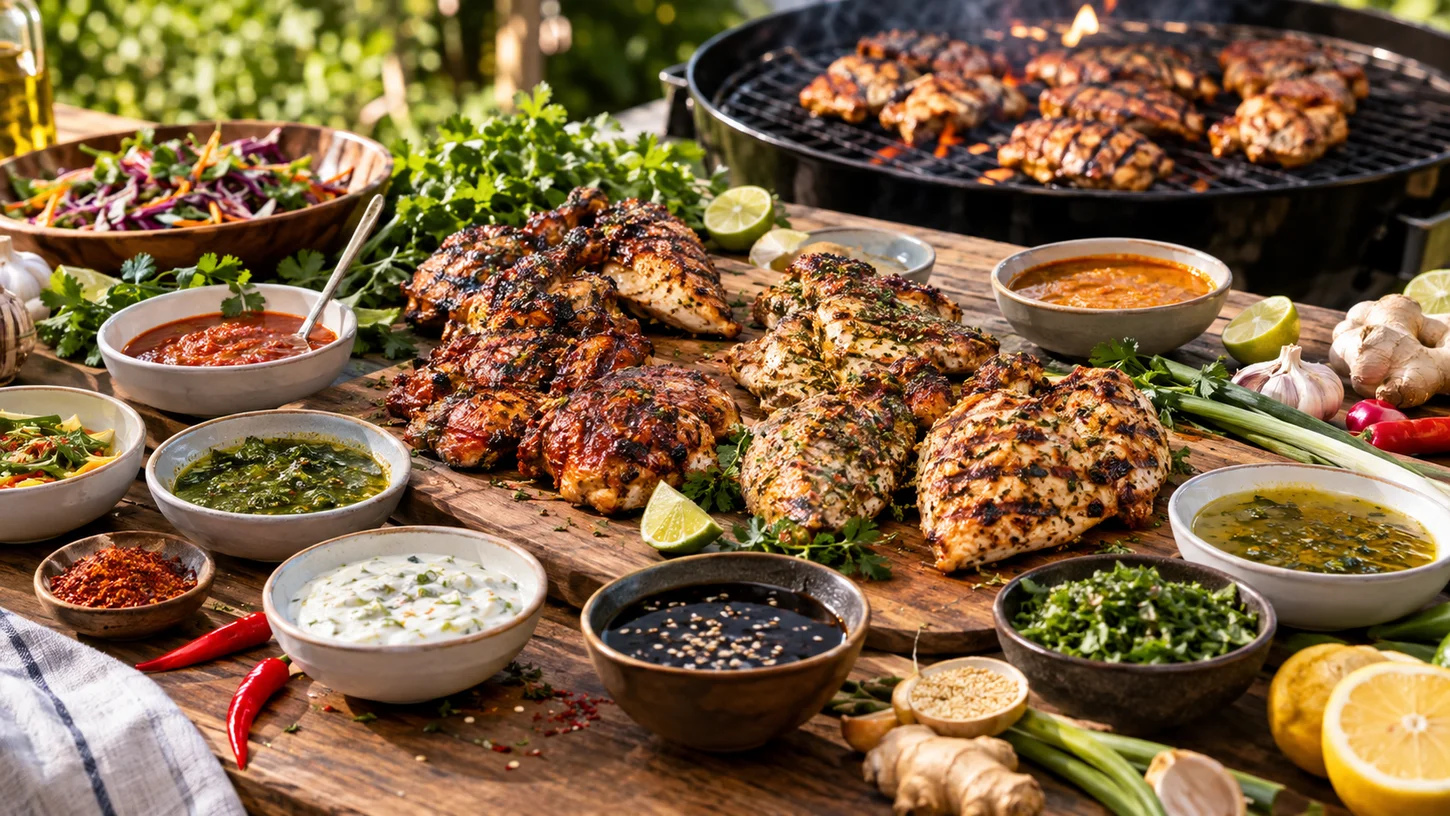
Grilled chicken doesn’t have to taste the same every time. The right marinade can take a simple piece of chicken in completely different directions — smoky and spicy Jamaican jerk, sweet and savoury Japanese yakitori, fragrant Indian tandoori, bright Mexican citrus, fiery Korean gochujang, or fresh Greek lemon and oregano. And that’s just the start.
This article is a culinary trip around the world. It covers 12 of the best chicken marinades for grilling, drawing on flavour traditions from Jamaica, India, Japan, Mexico, Portugal, Korea, Greece, the Middle East, Thailand, Argentina, China, and the Philippines. Each marinade style is well-suited to the BBQ or grill and brings something genuinely different to the table.
One thing worth keeping in mind before you start: the quality of the chicken matters. This is particularly true for simpler marinades — Greek lemon and herb, or Argentinian-style herb and garlic, for example — where the flavour of the chicken itself remains prominent. A good marinade can enhance and complement the meat, but it can’t compensate for poor-quality chicken.
Why Marinades Make Grilled Chicken So Much Better
What Does a Chicken Marinade Actually Do?
A marinade does several useful things. It adds flavour to the surface of the chicken and helps carry herbs, spices, and aromatics into the outer layer of the meat. It seasons the chicken more evenly than a simple pinch of salt at the end. The oil in a marinade helps spices and aromatics adhere to the surface, which means more flavour makes contact with the grill. And certain marinades — particularly those with sugars, honey, or soy sauce — contribute to surface browning and caramelisation during grilling.
One thing to keep in mind: most marinade flavour stays relatively close to the surface. The idea that a marinade deeply penetrates through a thick chicken thigh or breast is largely a myth. What marinades do very well is season and flavour the outside of the chicken — and that’s where most of the flavour hits you when you eat it anyway.
Marinades can also assist with moisture management. An oil-based marinade keeps the surface of the chicken from drying out on the grill, and yoghurt-based marinades in particular help maintain moisture during cooking.
Why Chicken Works With So Many Different Flavours
Chicken has a relatively mild, neutral flavour compared to red meat. That’s one of the reasons it’s used across so many different cuisines — it takes on the character of the marinade and seasoning without fighting against it. Citrus, chilli, fresh herbs, warm spices, yoghurt, soy sauce, coconut milk, garlic, ginger, and sweet glazes all work well with chicken. It’s one of the most versatile proteins on the grill.
Marinade vs Rub vs Glaze vs Sauce
These terms are sometimes used interchangeably, but they refer to different things:
- Marinade: a liquid mixture — typically containing acid, oil, and seasonings — applied before cooking. The chicken soaks in it before it goes on the grill.
- Rub: dry seasonings applied directly to the surface of the chicken before cooking. No liquid required.
- Glaze: usually applied during the later stages of cooking to create a sticky, caramelised coating. This is particularly relevant for Japanese yakitori, where the tare (a sweet-salty sauce) is brushed on as the chicken cooks, not used as a marinade beforehand.
- Sauce: served with or alongside the cooked chicken. Chimichurri, tzatziki, and peanut sauce are classic examples of condiments or dipping sauces rather than marinades.
12 of the Best Chicken Marinades for Grilling From Around the World
The following marinades are presented as global-inspired styles — distinct flavour profiles with identifiable roots — rather than claims that any single recipe represents the only authentic version from an entire cuisine. Marinade traditions vary enormously within countries and regions. These are starting points, not definitive recipes.
1. Jamaican Jerk Chicken Marinade 🇯🇲
Flavour Profile
Spicy, smoky, aromatic, slightly sweet, and warming. Jerk is bold and unmistakable.
Key Ingredients
- Scotch bonnet chilli
- Allspice
- Thyme
- Spring onion
- Garlic
- Ginger
- Lime
- Oil
- Optional: brown sugar
Best Chicken Cuts
Bone-in pieces work particularly well — thighs, drumsticks, and wings. The skin and fat protect the chicken during the longer grilling time jerk typically requires.
Grilling Tip
Keep a close eye on the heat. The sugar and aromatics in a jerk marinade can burn before the chicken is cooked through, especially over direct high heat. Consider finishing over indirect heat once the outside has some colour.
Serving Ideas
Festival bread, rice and peas, grilled pineapple, or a simple slaw.
2. Indian Tandoori-Style Chicken Marinade 🇮🇳
Flavour Profile
Spiced, tangy, creamy, aromatic, and smoky when it comes off the grill. Tandoori-style chicken has warmth without being straightforwardly hot.
Key Ingredients
- Natural yoghurt
- Lemon juice
- Garlic
- Ginger
- Garam masala
- Cumin
- Coriander
- Turmeric
- Chilli
Best Chicken Cuts
Thighs and drumsticks are the most forgiving. Boneless thighs and chicken breast pieces work well on skewers for quicker cooking.
Why Yoghurt Works So Well
Yoghurt is an excellent marinade base for a few reasons. It clings to the surface of the chicken and carries the spices with it, creating a coating that adheres through the grilling process. The mild acidity in yoghurt also helps the spice crust set during cooking rather than falling away from the meat. The result is a chicken with a well-seasoned, slightly charred exterior and tender, flavourful meat underneath.
Serving Ideas
Naan, rice, raita, fresh coriander, lemon wedges, and sliced onion.
3. Japanese Yakitori-Style Marinade and Tare 🇯🇵
Flavour Profile
Sweet, salty, umami-rich, smoky, and caramelised. One of the most satisfying flavour combinations for grilled chicken.
Key Ingredients
- Soy sauce
- Mirin-style seasoning
- Sake (or a suitable alternative)
- Sugar
- Optional: ginger and garlic
Marinade or Tare?
This is worth clarifying. Traditional yakitori isn’t simply chicken soaked in a marinade before grilling. Tare is a reduction of soy, mirin, sake, and sugar — and it’s applied during cooking, not beforehand. The tare is brushed onto the chicken in stages over the grill, building a glossy, caramelised coating layer by layer. Treating it like a standard marinade and soaking the chicken overnight will give you a different result.
Best Chicken Cut
Chicken thigh (momo) is the cut most commonly associated with yakitori. Thigh has enough fat to handle the high, direct heat of a grill without drying out, and its flavour is richer and more forgiving than breast. The fat renders during cooking, which helps develop the caramelised exterior the tare is designed to create.
For a detailed guide to yakitori chicken thighs — including the tare preparation and skewering technique — see our yakitori chicken thighs (momo yakitori) recipe.
Grilling Tip
Don’t apply the tare too early. Grill the chicken most of the way through first, then begin brushing the tare on during the final stages of cooking. This builds the glaze without burning it.
4. Mexican Citrus and Chilli Chicken Marinade 🇲🇽
Flavour Profile
Bright, citrusy, spicy, smoky, and fresh. This style of marinade is well-suited to the high heat of a BBQ grill.
Key Ingredients
- Lime juice
- Orange juice
- Garlic
- Cumin
- Chilli
- Oregano
- Paprika
- Olive oil
Best Chicken Cuts
Thighs, breast, wings, and kebabs. This marinade is versatile and works across different cuts.
Serving Ideas
Tacos, rice bowls, tortillas with salsa, guacamole, and grilled vegetables. This style of chicken also works well sliced as a filling for fajitas or enchiladas.
Grilling Tip
The citrus in this marinade can start to affect the texture of the meat if left too long. Aim for 2 to 4 hours rather than an overnight marinade.
5. Portuguese-Style Piri Piri Chicken Marinade 🇵🇹
Flavour Profile
Hot, garlicky, tangy, citrusy, and smoky. Piri piri is assertive — it’s not a background flavour.
Key Ingredients
- Piri piri or bird’s eye chilli
- Garlic
- Lemon
- Vinegar
- Olive oil
- Paprika
- Herbs (parsley, oregano)
Best Chicken Cuts
Whole spatchcock chicken is the classic format. Thighs and wings also work well. The high heat of a grill suits this marinade.
Grilling Tip
Always set aside a separate portion of the sauce before it touches raw chicken. Never reuse marinade that has been in contact with raw poultry as a basting or serving sauce — make a fresh batch or reserve some at the start.
Serving Ideas
Chips, grilled corn, rice, and a simple green salad.
6. Korean Gochujang Chicken Marinade 🇰🇷
Flavour Profile
Spicy, sweet, salty, fermented, and deeply savoury. Gochujang gives this marinade a complexity that goes well beyond simple heat.
Key Ingredients
- Gochujang (Korean fermented chilli paste)
- Soy sauce
- Sesame oil
- Garlic
- Ginger
- Rice vinegar
- Honey or sugar
Best Chicken Cuts
Boneless thighs, wings, drumsticks, and skewers. The sauce clings well to smaller pieces and builds good colour during grilling.
Grilling Tip
Gochujang and sugar together can caramelise quickly. Keep the heat controlled and watch the chicken closely during the final few minutes of cooking.
Serving Ideas
Steamed rice, pickled cucumber, kimchi, sesame seeds, and sliced spring onion.
7. Greek Lemon and Oregano Chicken Marinade 🇬🇷
Flavour Profile
Fresh, citrusy, herby, and garlicky. This is one of the cleaner, more straightforward marinades on the list — and it’s also one of the most reliably good.
Key Ingredients
- Lemon juice and zest
- Olive oil
- Garlic
- Dried oregano
- Salt
- Black pepper
Best Chicken Cuts
Breast, thighs, drumsticks, and kebabs. This works well across all common cuts.
Serving Ideas
Greek salad, pita bread, tzatziki, roast potatoes with lemon, and grilled vegetables.
Why This Marinade Works Well for Brisbane BBQs
It’s simple to put together, requires ingredients most kitchens already have, and produces consistent results. On a hot Brisbane afternoon with a grill already running, this is the kind of marinade that doesn’t demand too much preparation time.
8. Middle Eastern Shawarma-Style Chicken Marinade 🌍
Flavour Profile
Warm, aromatic, garlicky, spiced, and tangy. This style of marinade produces deeply flavoured chicken with a good exterior char.
Key Ingredients
- Yoghurt
- Lemon
- Garlic
- Cumin
- Coriander
- Paprika
- Turmeric
- Cinnamon or allspice
- Olive oil
Best Chicken Cuts
Boneless thighs, breast pieces, and skewers. Consistent sizing is important for even cooking when grilling.
Grilling Tip
If using skewers, cut the chicken into consistent pieces so everything cooks at roughly the same rate. A mix of large and small pieces on the same skewer creates uneven cooking.
Serving Ideas
Flatbread, garlic sauce, pickled turnip, cucumber, tomato, and fresh herbs.
9. Thai Coconut and Lemongrass Chicken Marinade 🇹🇭
Flavour Profile
Fragrant, creamy, citrusy, spicy, and fresh. The lemongrass and coconut milk give this marinade a distinctive character that stands apart from other Asian-inspired options.
Key Ingredients
- Lemongrass (bruised and finely sliced)
- Garlic
- Ginger or galangal
- Coconut milk
- Fish sauce
- Lime
- Chilli
- Fresh coriander
Best Chicken Cuts
Thighs, drumsticks, wings, and skewers. The richness of the coconut milk marinade works well with cuts that have some fat to them.
Grilling Tip
Remove as much of the lemongrass and larger aromatics from the surface before grilling — they can burn quickly and turn bitter before the chicken is cooked through.
Serving Ideas
Jasmine rice, cucumber salad, fresh herbs, lime wedges, and peanut sauce.
10. Argentinian-Inspired Herb and Garlic Chicken Marinade 🇦🇷
Flavour Profile
Fresh, herby, garlicky, and tangy. This is a straightforward, vibrant marinade that lets the quality of the chicken come through.
Key Ingredients
- Flat-leaf parsley
- Garlic
- Oregano
- Red wine vinegar
- Olive oil
- Chilli flakes
- Black pepper
A Note on Chimichurri
Traditional chimichurri is served as a sauce or condiment rather than used as a conventional marinade. For this article, we’re talking about a chimichurri-inspired preparation used to marinate the chicken before it goes on the grill. The flavour is similar but the application is different — the chicken soaks in the mixture rather than being sauced at the table.
Best Chicken Cuts
Breast, thighs, spatchcock chicken, and skewers.
Serving Ideas
Grilled vegetables, crusty bread, a fresh herb sauce at the table, and simple salads.
11. Chinese Honey, Soy and Ginger Chicken Marinade 🇨🇳
Flavour Profile
Sweet, salty, sticky, aromatic, and umami-rich. This marinade produces excellent colour on the grill and a glaze that’s hard to resist.
Key Ingredients
- Soy sauce
- Honey
- Ginger
- Garlic
- Sesame oil
- Rice vinegar
- Optional: chilli
Best Chicken Cuts
Wings, thighs, drumsticks, and kebabs. This marinade suits smaller pieces that cook relatively quickly.
Grilling Tip
Use moderate rather than high heat, particularly towards the end of cooking. Honey burns quickly, and a grill that’s too hot will scorch the surface before the chicken is cooked through. Let the temperature drop slightly once the chicken has initial colour.
Serving Ideas
Steamed jasmine rice, stir-fried greens, sesame seeds, and sliced spring onion.
12. Filipino-Style Calamansi and Soy Chicken Marinade 🇵🇭
Flavour Profile
Citrusy, salty, garlicky, slightly sweet, and peppery. Calamansi gives this marinade a brightness that’s distinct from the lime or lemon used in most other styles on this list.
Key Ingredients
- Calamansi juice (or a combination of lime and lemon as a substitute)
- Soy sauce
- Garlic
- Black pepper
- Brown sugar
- Optional: vinegar
Best Chicken Cuts
Thighs, drumsticks, wings, and whole or spatchcock chicken. This marinade suits most cuts.
Grilling Tip
The combination of citrus, soy, and sugar develops good colour quickly when the chicken hits the grill. Keep an eye on the heat during the first few minutes to avoid scorching.
Serving Ideas
Steamed rice, pickled green papaya (atchara), garlic fried rice, and grilled eggplant.
Chicken Marinade Cheat Sheet: Which One Should You Try?
Not sure where to start? Use this quick-reference table to match your mood to a marinade.
| If You Want… | Try… | Best Chicken Cut |
| Spicy and smoky | Jamaican jerk | Thighs |
| Creamy and aromatic | Tandoori-style | Thighs |
| Sweet and savoury | Japanese yakitori | Thighs |
| Bright and citrusy | Mexican citrus | Breast or thighs |
| Hot and garlicky | Piri piri | Whole chicken |
| Sweet and spicy | Korean gochujang | Thighs or wings |
| Light and herby | Greek lemon and oregano | Breast or thighs |
| Warm and aromatic | Shawarma-style | Thighs |
| Fresh and fragrant | Thai coconut lemongrass | Thighs |
| Herby and garlicky | Argentinian-inspired | Breast or thighs |
| Sticky and sweet | Chinese honey-soy | Wings |
| Salty and citrusy | Filipino-style | Thighs |
Match Your Chicken Cut to the Right Marinade
Different cuts suit different marinade styles. The fat content, bone structure, thickness, and cooking time of each cut all affect how it interacts with a marinade on the grill.
Chicken Thighs
Chicken thighs are the most forgiving cut for grilling. Their higher fat content means they hold up to high heat without drying out, and they absorb marinades well across the surface. The yakitori recipe specifically highlights thigh — known in Japanese cooking as momo — as the best cut for high-heat grilling because of its fat content and flavour.
Thighs work well with:
- Jerk
- Tandoori
- Yakitori tare
- Korean gochujang
- Shawarma
- Thai coconut lemongrass
- Filipino-style
If you’re looking for free-range options, A Place 2 Meat’s free-range chicken thighs are available online for Brisbane delivery or click and collect.
Chicken Breast
Breast is leaner than thigh and needs more careful attention on the grill. It benefits from marinades that include a generous amount of oil (to help prevent the surface from drying out) or yoghurt (to maintain moisture during cooking). Avoid leaving breast in highly acidic marinades for too long — it can start to affect the texture.
Breast works well with:
- Greek lemon and oregano
- Mexican citrus
- Argentinian herb and garlic
- Thai coconut lemongrass
- Lighter marinades generally
For more on grilling technique with this cut, including how to combine direct and indirect heat, see our guide to juicy and tender chicken breasts.
Chicken Wings
Wings are well-suited to bold, sticky marinades because the skin crisps up on the grill and the flavour of the marinade concentrates as it reduces. They cook relatively quickly and work well with high-flavour styles.
Wings work well with:
- Korean gochujang
- Jerk
- Piri piri
- Chinese honey-soy
- Thai coconut lemongrass
Chicken Drumsticks
Drumsticks take a bit longer to cook than wings and benefit from bone-in, high-flavour marinades that can handle the extra time on the grill. They’re an excellent choice for casual BBQs where the chicken needs to hold up over a longer cooking period.
Drumsticks work well with:
- Jerk
- Tandoori
- Piri piri
- Filipino-style
- Korean gochujang
For timing guidance, our guide to how long to cook chicken drumsticks covers cooking times for different methods including the grill.
Chicken Kebabs
Kebabs — chicken cut into pieces and grilled on skewers — suit marinades that coat well and develop good colour quickly. Consistent sizing of the chicken pieces is important so everything cooks at the same rate.
Kebabs work well with:
- Mexican citrus
- Greek lemon and oregano
- Shawarma-style
- Thai coconut lemongrass
- Chinese honey-soy
A Place 2 Meat’s chicken kebabs are pre-prepared and ready to marinate — the product page itself includes a marinade using lemon, garlic, paprika, cumin, turmeric, and coriander.
Whole Chicken and Spatchcock Chicken
A whole or spatchcock chicken takes longer to cook through and needs a marinade that can handle extended grill time without burning. Bold, herb-heavy, or chilli-based marinades work particularly well here.
Whole chicken works well with:
- Piri piri
- Jerk
- Greek lemon and oregano
- Herb and garlic
For a comprehensive overview of cooking times and methods,our guide to how to cook a whole chicken covers everything from spatchcocking to indirect heat roasting.
Understanding the Ingredients in a Chicken Marinade
Every marinade is essentially a combination of a few core building blocks. Understanding what each component does makes it easier to adjust a recipe, substitute an ingredient, or build your own from scratch.
Acidic Ingredients
Acid contributes brightness and flavour to a marinade and helps carry other flavours into the outer layer of the chicken. Common acids include lemon, lime, orange juice, vinegar, calamansi, and yoghurt.
One thing to keep in mind: more acid isn’t automatically better. A marinade that’s very high in acid — particularly citrus juice — can begin to change the texture of the chicken surface if left for too long, making it slightly firm or chalky on the outside before it even hits the grill. Aim for balance.
Oils and Fats
Oil helps the other marinade ingredients coat and cling to the chicken. It also protects the surface of the meat from the direct heat of the grill and helps carry fat-soluble flavours from herbs and spices. Olive oil is the most common choice, but sesame oil, coconut milk, and yoghurt-based marinades all bring their own character.
Salty and Umami Ingredients
Salt draws out moisture from the surface of the chicken and then gets absorbed back in, seasoning the meat from the outside. Soy sauce, fish sauce, and miso all add salt alongside a layer of umami depth that plain salt can’t replicate. These are particularly important in Asian-style marinades.
Sweet Ingredients
Honey, brown sugar, maple syrup, and palm sugar all contribute to browning and caramelisation during grilling. The sugars react with heat to develop the sticky, golden exterior that makes grilled chicken so appealing. The trade-off is that they can burn if the heat is too high or the chicken is on the grill for too long. This is particularly relevant for Korean gochujang, Chinese honey-soy, and yakitori tare.
Herbs, Spices and Aromatics
This is where a marinade develops its regional character. Garlic and ginger are almost universal. Cumin, coriander, and turmeric lean Middle Eastern or South Asian. Lemongrass and fish sauce signal Southeast Asia. Allspice and Scotch bonnet belong to Jamaica. Oregano and lemon point toward Greece or the Mediterranean.
How to Make the Perfect Chicken Marinade
Building a good marinade from scratch is more straightforward than it might seem. Most work on the same basic framework.
Start With an Acid
Choose your acid based on the flavour profile you’re after. Lemon and lime for bright, citrusy marinades. Vinegar for tang and depth. Yoghurt for creamier, spiced styles. This will set the general direction of the marinade.
Add Oil
Oil is the carrier. It helps the acid, salt, and aromatics distribute evenly across the chicken. Olive oil works almost universally. Use sesame oil for Asian-style marinades or coconut milk for Thai-inspired preparations.
Season With Salt
Don’t skip the salt. A marinade without adequate salt will taste flat, no matter how good the other ingredients are. Soy sauce, fish sauce, and miso all bring salt alongside additional flavour.
Add Herbs, Spices and Aromatics
This is where the marinade takes on its distinct character. Use fresh garlic, ginger, chilli, and herbs where you can. Dried spices like cumin, coriander, paprika, and turmeric are effective and easy to work with.
Balance Sweet, Sour, Salty and Spicy Flavours
A well-balanced marinade has some interplay between these four elements. If it tastes too sharp, add a little sweetness. Too sweet, add a bit more acid or salt. Too salty, bring it back with a touch of sweetness or more oil. The goal is a marinade that tastes good on its own — not one-dimensional in any direction.
Don’t Overcomplicate the Marinade
A marinade doesn’t need 15 to 20 ingredients to taste good. Some of the most effective ones on this list have only 5 or 6 components. Greek lemon and oregano, for example, is almost entirely pantry basics. The Filipino-style calamansi and soy marinade is similarly simple but produces excellent results. More ingredients doesn’t mean more flavour — it often just means more noise.
How Long Should You Marinate Chicken Before Grilling?
Marinating time depends on the cut, the strength of the marinade, and the grilling method. Here’s a practical guide.
Quick Marinades: 30 Minutes to 2 Hours
For thin cuts like chicken breast fillets, kebab pieces, or wings, 30 minutes to 2 hours is often enough. The marinade doesn’t need to work through a thick piece of meat, so shorter times are effective. This is also the right approach when the marinade is high in citrus juice — you don’t want the acid working on the surface for too long.
Medium Marinades: 2 to 6 Hours
This is the most useful window for most cuts and most marinades. Thighs, drumsticks, and skin-on pieces all benefit from a few hours of marinating. The flavour develops properly without the acid having a negative effect on the texture.
Overnight Marinades
Overnight marinating (8 to 12 hours) works well for bone-in cuts, whole chicken, and marinades that aren’t high in acid — yoghurt-based, soy-based, and oil-and-herb marinades all respond well to a longer rest. The flavour is deeper and the chicken is generally more evenly seasoned.
Why Marinating Longer Isn’t Always Better
With highly acidic marinades — particularly those heavy in citrus juice or vinegar — extending the marinating time too far can change the texture of the chicken. The outer layer can become slightly firm, chalky, or mushy depending on the acid level. This is rarely a problem with yoghurt-based or soy-based marinades, but it’s worth keeping in mind when working with a heavily citrus-forward recipe.
Always Marinate Chicken in the Refrigerator
Never marinate chicken at room temperature. Raw poultry should stay refrigerated throughout the marinating process. Take the chicken out of the fridge 15 to 20 minutes before grilling to let it come closer to room temperature, which helps it cook more evenly, but keep it refrigerated right up until that point.
Should You Marinate or Brine Your Chicken?
Marinating and brining are both useful techniques, but they work differently and suit different situations.
What Does a Marinade Do?
A marinade flavours the surface of the chicken and carries herbs, spices, and aromatics into the outer layer of the meat. The oil in a marinade helps protect the surface during grilling, and the acid contributes brightness and flavour. Most of the effect is concentrated on the exterior of the chicken.
What Does a Brine Do?
A brine — a saltwater solution, sometimes with added sugar or aromatics — works differently. The salt penetrates further into the meat, seasoning it from within and helping it retain moisture during cooking. Brined chicken tends to stay juicier through high-heat cooking methods like grilling. The trade-off is that a plain brine doesn’t add much in the way of surface flavour or colour.
When Should You Choose a Marinade?
Choose a marinade when you want a specific flavour profile on the surface of the chicken. All 12 styles in this article are marinade-based. They add character, colour, and aroma that a plain brine won’t deliver.
When Might Brining Be Better?
Brining is particularly useful for leaner cuts — chicken breast in particular — where moisture retention during grilling is a concern. If you want very juicy grilled chicken breast without the strong surface flavour of a marinade, a brine is a good option.
Can You Brine and Then Marinate Chicken?
Yes. Some cooks brine chicken first to lock in moisture, then apply a marinade for surface flavour before grilling. Be careful about overall salt levels — a brined chicken that then goes into a soy-heavy marinade can become very salty. Reduce the salt in the marinade if you’ve already brined the bird.
For more on getting the best results from chicken breast on the grill, see our guide to juicy and tender chicken breasts.
How to Grill Marinated Chicken Without Burning It
A well-prepared marinade can still go wrong if the grilling technique isn’t right. These are the key steps for getting marinated chicken off the grill in good shape.
Preheat the BBQ Properly
Give the grill time to reach the right temperature before the chicken goes on. A cold grill means the chicken sits in contact with the grates longer before getting any colour, increasing the chance of sticking.
Pat Excess Marinade From the Chicken
Before the chicken goes on the grill, shake or pat off the excess marinade. Too much liquid on the surface creates steam rather than browning, and excess marinade dripping onto the grill can cause flare-ups. A thin, even coating of marinade is more effective than a thick, wet layer.
Use Direct Heat for Browning
Start the chicken over direct heat to get colour on the surface. This is where the browning and caramelisation happen. Don’t move the chicken around too much during this stage — let it sit and develop colour before turning.
Use Indirect Heat to Finish Cooking
Once the chicken has colour on the outside, move it to a cooler part of the grill to finish cooking through. This is particularly important for bone-in pieces, thick thighs, and whole chicken. Direct heat alone runs the risk of a burnt exterior before the interior is safely cooked.
This combination of direct heat for browning followed by indirect heat to finish is a well-established technique for grilling chicken breast without drying it out.
Don’t Add Sugary Marinades Too Early
Marinades that contain honey, sugar, or sweet glazes — Korean gochujang, Chinese honey-soy, yakitori tare — should generally be applied during the later stages of cooking rather than from the start. Let the chicken cook most of the way through over moderate heat first, then apply the sweet elements and finish with a bit more direct heat to caramelise.
Know When to Add a Glaze
A glaze is different from a marinade. If you’re using a separate glaze or sauce to finish the chicken — brushing on additional tare for yakitori, or fresh piri piri sauce at the end — add it in stages during the final few minutes of cooking. Multiple thin coats build better flavour and colour than one thick application.
Use a Meat Thermometer
The safest way to know when the chicken is cooked is a meat thermometer. Chicken should reach an internal temperature of 75°C (165°F) at the thickest part. Thighs are particularly forgiving and can go slightly above this without becoming dry; breast is less forgiving and is best pulled at 75°C.
Let the Chicken Rest Before Serving
Give the chicken a few minutes to rest after it comes off the grill. This allows the juices to redistribute through the meat rather than running out the moment the chicken is cut.
How to Get Better Browning and Crispy Chicken Skin
Good surface colour and crispy chicken skin are two of the most satisfying things about grilled chicken. Here’s how to achieve them.
Pat the Chicken Dry
Before marinating, pat the chicken dry with paper towel. And again, pat off any excess marinade before it goes on the grill. Moisture on the surface of the chicken works against browning.
Don’t Crowd the Grill
Too much chicken on the grill at once traps steam, which works against browning. Give each piece enough space so that heat can circulate properly.
Keep the Grill Grates Clean
Clean, well-oiled grill grates help the chicken cook evenly and prevent sticking. Residue from previous cooking sessions can transfer unwanted flavour and cause the skin to tear when you try to turn the chicken.
Avoid Excess Marinade on the Surface
A wet, thick layer of marinade steams rather than browns. Pat the chicken down before it goes on the grill to ensure a thin, even coating.
Add Glazes Towards the End
Sweet glazes and sticky sauces build colour quickly — which is part of their appeal — but they can also burn if applied too early. Add them in the final few minutes of cooking for the best results.
For a full breakdown of techniques for getting crispy skin across different cooking methods, see our guide to how to get crispy chicken skin, which covers moisture, marinades, glazes, and grilling in detail.
Common Chicken Marinade Mistakes to Avoid
Using Too Much Acid
Highly acidic marinades — particularly those heavy in citrus juice — can begin to break down the surface of the chicken if left too long. Stick to the recommended marinating times and aim for balance in the acid level of the marinade.
Marinating Chicken at Room Temperature
Raw chicken should always be marinated in the refrigerator. Marinating at room temperature increases the risk of bacterial growth, particularly over longer periods.
Applying Sugary Marinades Too Early
Sugar and honey burn quickly over direct heat. Apply sweet glazes and sticky marinades towards the end of the cooking process rather than from the start.
Reusing Marinade That Has Touched Raw Chicken
Marinade that has been in contact with raw poultry should not be used as a basting sauce or served at the table. Set aside a separate portion before the chicken goes in, or make a fresh batch for serving.
Overcrowding the Grill
Too many pieces of chicken at once traps steam and prevents the surface from browning properly. Work in batches if necessary.
Cooking Over Excessively High Heat
Very high heat causes the outside of the chicken to char before the inside is safely cooked. Use a combination of direct and indirect heat for most bone-in pieces and thicker cuts.
Overcooking Chicken Breast
Breast dries out faster than thigh. Use a meat thermometer and take it off the grill at 75°C. Letting it rest after cooking also helps.
Forgetting to Season the Rest of the Meal
A well-marinated chicken is only part of the meal. The sides, sauces, and accompaniments all need proper seasoning too.
How to Build the Perfect BBQ Chicken Spread
If you’re cooking for a group or entertaining at home in Brisbane, thinking through the combination of cuts, marinades, and sides makes the whole thing come together more easily.
Choose Two or Three Chicken Cuts
A mix of cuts gives your guests variety and makes batch cooking more manageable. A combination like thighs (for the forgiving cooking time), wings (for the snack element), and kebabs (easy to serve and portion) covers most needs without overcomplicating the grill.
Offer Different Marinade Profiles
If you’re running two or three different marinades, choose options that contrast. One spicy (jerk, Korean gochujang, piri piri), one sweet and savoury (yakitori or Chinese honey-soy), and one fresh and herby (Greek or Argentinian-style) gives the spread range without repetition.
Add Fresh and Crunchy Sides
Fresh sides balance the richness of grilled, marinated chicken. Slaws, chopped salads, cucumber, and grilled vegetables all work well. They’re also easy to prepare ahead of time.
Add Bread, Rice or Potatoes
Every BBQ spread benefits from a starchy base. Flatbread, steamed jasmine rice, and lemon potatoes all pair well with the marinades in this article.
Don’t Forget Dipping Sauces and Finishing Condiments
Serving a sauce alongside the chicken gives your guests something to build with. Tzatziki, garlic sauce, kimchi, peanut sauce, fresh chimichurri, or even a simple lime wedge all add value to the spread.
Feeding a Crowd? Choose Chicken That’s Easy to Grill in Batches
For larger groups, wings and kebabs are the most practical choices — they cook quickly, portion easily, and hold up well if they come off the grill a few minutes apart.
For bulk buying, A Place 2 Meat’s BBQ meat packs and family packs are worth looking at — they offer good value when you’re cooking for a crowd. Browse the full chicken range online.
How to Choose Quality Chicken for Grilling
Choose the Right Cut for Your Marinade
As covered above, different cuts suit different marinade styles. Thighs are the most versatile and forgiving for most grill situations. Breast needs a more careful eye. Wings and drumsticks suit bold, high-flavour preparations.
Why Chicken Quality Matters
The quality of the chicken matters more than many people realise — particularly for simpler marinades. A Greek lemon and oregano marinade or a chimichurri-inspired preparation doesn’t mask the flavour of the chicken the way a heavily spiced jerk or tandoori marinade might. When the marinade is light and bright, the character of the meat comes through. Good chicken makes a meaningful difference.
Fresh Chicken for Your Next BBQ
A Place 2 Meat is a Brisbane butcher offering fresh, hand-cut chicken that is halal-certified and sourced without added hormones. Free-range options are available. Whether you’re after thighs for a batch of Korean gochujang, wings for a honey-soy marinade, or whole chicken for a piri piri on the BBQ, the chicken range is available online for delivery or click and collect.
Browse the full chicken range at A Place 2 Meat.
Chicken Marinade FAQs
What Is the Best Marinade for Grilled Chicken?
There’s no single best marinade — it depends on the flavour profile you’re after. Jamaican jerk is hard to beat for a bold, spicy BBQ. Greek lemon and oregano is the most versatile and crowd-pleasing. Korean gochujang is ideal if you want something with heat and depth. The best marinade is the one that suits the cut you’re using and the occasion.
What Should I Marinate Chicken In?
A good chicken marinade includes an acid (lemon, lime, vinegar, or yoghurt), an oil (olive oil, sesame oil, or coconut milk), salt or a salty ingredient (soy sauce, fish sauce), and your choice of herbs, spices, and aromatics. From there, the combination depends on the flavour direction you want.
How Long Should Chicken Be Marinated Before Grilling?
30 minutes to 2 hours for thin pieces or high-acid marinades. 2 to 6 hours for most cuts and marinade styles. Overnight for bone-in pieces, yoghurt-based, or soy-based marinades. Always marinate in the refrigerator.
Is It Better to Marinate Chicken Breast or Thighs?
Both respond well to marinades, but thighs are more forgiving on the grill because of their higher fat content. Breast benefits from marinades that include oil or yoghurt, and it requires more careful attention to heat and timing.
Can You Marinate Chicken Overnight?
Yes, for most marinades. Overnight works particularly well for yoghurt-based marinades like tandoori, soy-based marinades, and bone-in pieces. Be careful with highly acidic marinades — extended marinating time in a lot of citrus juice can start to affect the texture of the chicken.
Can You Use Chicken Marinade as a Sauce?
Not if it has been in contact with raw chicken. Always set aside a portion of the marinade before adding the raw chicken, and use that reserved portion as a sauce or basting liquid. Alternatively, make a separate small batch for serving.
What Marinade Makes Chicken Juicy?
Yoghurt-based marinades are particularly effective at maintaining moisture during grilling. Oil-based marinades also help by protecting the surface of the chicken from direct heat. Avoiding overcooking — particularly with chicken breast — matters just as much as the marinade itself.
What Is the Best Chicken Marinade for a BBQ?
For a crowd-pleasing Brisbane BBQ, Greek lemon and oregano is a safe starting point. For something with more character, Korean gochujang or Jamaican jerk work well for thighs and wings. Chinese honey-soy is an easy option that produces good colour and flavour with minimal preparation.
Should You Pat Chicken Dry Before Grilling?
Yes. Patting off excess marinade before the chicken goes on the grill removes the wet surface layer that prevents browning. A thin, even coating of marinade produces better colour than a thick, wet one.
What Is the Best Chicken Cut for Grilling?
Chicken thighs are the most forgiving and flavourful cut for the grill. Wings are excellent for high-heat, bold marinades. Breast requires the most attention but produces clean, lean results with the right marinade and technique. Kebabs — chicken on skewers — are one of the most practical options for groups.
Can You Freeze Chicken in a Marinade?
Yes. Chicken can be frozen in a marinade, which means you can prepare multiple batches in advance and pull them from the freezer as needed. As the chicken defrosts, it continues to absorb the marinade. Defrost in the refrigerator rather than at room temperature, and use within 24 hours of defrosting.
Take Your Grilled Chicken Around the World With Fresh Chicken From A Place 2 Meat
This article has covered a lot of ground — from Jamaica to India, Japan to Mexico, Portugal to Korea, Greece to the Middle East, Thailand to Argentina, China to the Philippines. Twelve marinade styles, each with its own distinct flavour profile and grilling approach.
The core idea is simple: good chicken + a well-balanced marinade + a properly prepared grill = a much better BBQ. The marinade you choose changes the experience entirely, and the quality of the chicken you start with sets the ceiling for what’s possible.
Ready to try a new marinade? Start with fresh chicken from A Place 2 Meat — Brisbane’s local butcher for hand-cut, halal-certified, hormone-free chicken. Choose the cut that suits your next grilling adventure and shop chicken online with fast delivery across Brisbane.
🥩 Cook Pub-Quality Chicken Parmigiana at Home
Start with hand-trimmed, hormone-free chicken breast fillets from A Place 2 Meat in Newmarket. Halal-certified and cut fresh daily for the juiciest parmi.